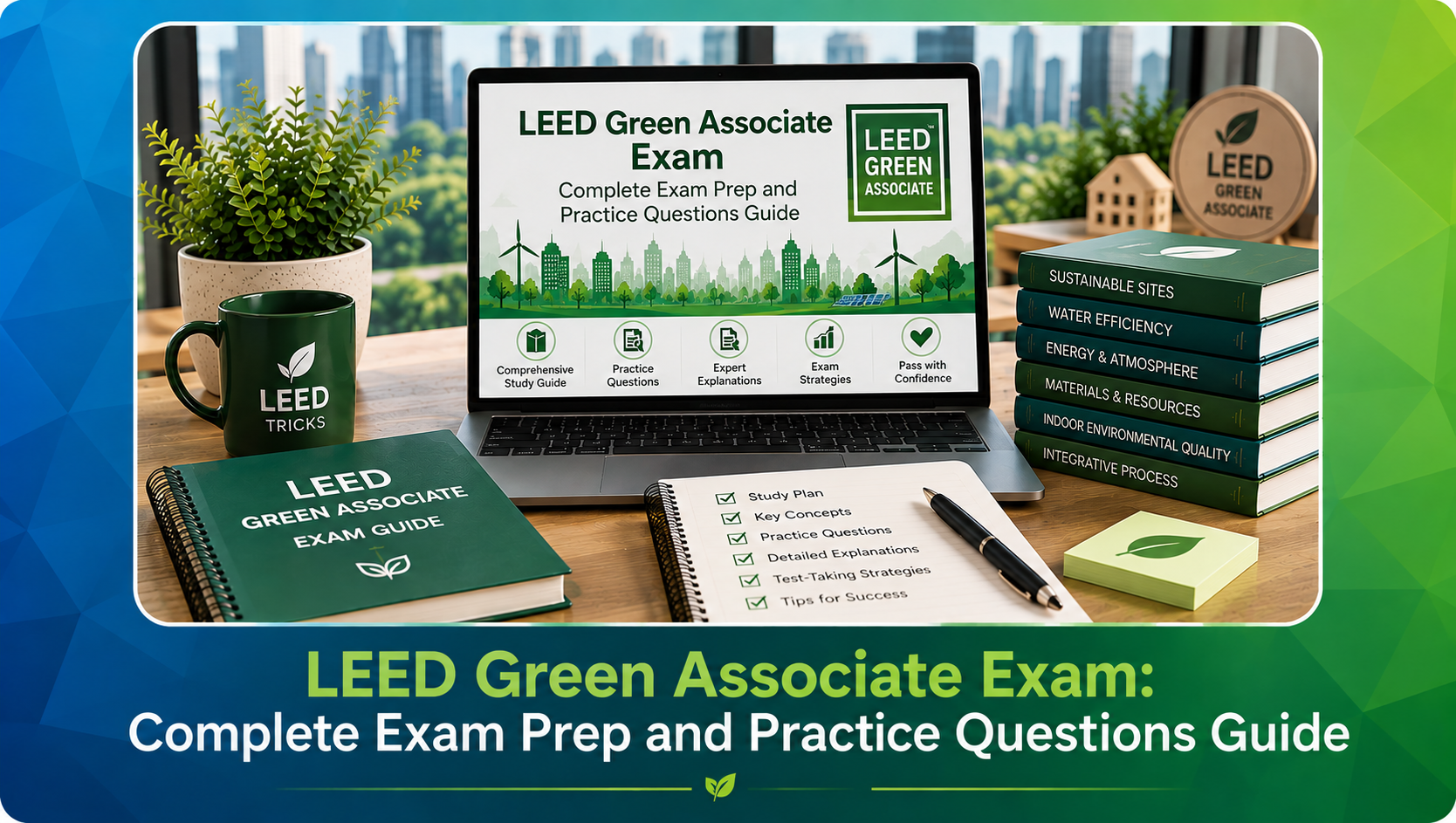
The Ultimate Guide to LEED Green Associate – A Comprehensive Introduction and Perfect Exam Preparation!

The Ultimate Guide to LEED Green Associate – A Comprehensive Introduction and Perfect Exam Preparation!
The LEED Green Associate certification represents the first and most essential step for any engineer seeking excellence in sustainability and green building. This credential is more than just an addition to your qualifications—it is a key that opens wide professional opportunities, especially for recent engineering graduates who aspire to stand out in a competitive job market.
By passing the LEED Green Associate exam, you can demonstrate your knowledge of green building practices and energy efficiency while gaining a comprehensive understanding of global standards for sustainable design.
LEEDtricks provides the optimal path to obtaining this certification through comprehensive professional training and continuous support, helping you pass the exam on your first attempt and join the elite experts in sustainability and green buildings.
What Is the LEED Green Associate Certification and Why Is It Important for Engineers?
The LEED Green Associate certification is the foundational credential within the LEED system (Leadership in Energy and Environmental Design), developed by the U.S. Green Building Council (USGBC).
It aims to qualify engineers and professionals interested in sustainable construction to understand and apply green building standards without requiring extensive experience in large-scale projects.
Why It Matters for Engineers
- Enhances job opportunities: Engineers holding this certification have a competitive advantage in the job market, as top firms seek sustainability and green building specialists.
- Develops professional skills: The certification provides deep knowledge in energy efficiency, resource management, indoor environmental quality, and environmental sustainability.
- Leads to higher-paying jobs: Sustainable projects demand certified expertise, increasing professional value.
- Improves project contribution: It enables engineers to effectively participate in designing and implementing projects that reduce environmental impact and enhance building performance.
In short, the LEED Green Associate is the ideal starting point for any engineer seeking excellence and entry into the global community of sustainability and green building experts. It also lays the foundation for pursuing advanced LEED AP credentials.
Professional and Personal Benefits of Earning the LEED Green Associate Credential
Obtaining the LEED Green Associate credential provides engineers with a wide range of benefits—professionally and personally—making it a valuable investment for their future in sustainable construction.
Professional Benefits
- Greater competitiveness: Certified engineers stand out among peers and are more likely to be hired by leading sustainability-driven companies.
- Higher salary potential: Specialization in sustainability often leads to better salaries and faster career growth.
- Expanded professional network: Joining the LEED community allows interaction with global sustainability experts.
- Gateway to advanced credentials: LEED Green Associate is the prerequisite for specialized LEED AP credentials such as BD+C or O+M.
Personal Benefits
- Environmental awareness: Enhances understanding of sustainability, energy efficiency, and resource management.
- Meaningful contribution: Empowers professionals to actively design and execute eco-friendly projects that reduce carbon footprints.
- Increased confidence: Reflects commitment to global standards and boosts professional credibility.
- Personal achievement: Builds a strong reputation as a sustainability-driven engineer.
Core LEED Green Associate Categories and Rating Levels
The LEED Green Associate system is based on a global framework developed by the USGBC to assess environmental performance in buildings and projects. It focuses on key criteria to help engineers understand sustainability holistically:
Main Categories
- Location & Transportation (LT): Selecting accessible sites and encouraging sustainable transport.
- Water Efficiency (WE): Reducing water use through innovative reuse systems and efficient fixtures.
- Energy & Atmosphere (EA): Optimizing energy performance with renewable sources and energy-saving technologies.
- Materials & Resources (MR): Using eco-friendly materials, minimizing waste, and promoting recycling.
- Indoor Environmental Quality (IEQ): Improving air quality and lighting to enhance user comfort and health.
- Innovation (IN): Applying creative design solutions to boost project performance.
LEED Certification Levels
- Certified: 40–49 points
- Silver: 50–59 points
- Gold: 60–79 points
- Platinum: 80+ points
These criteria and levels help engineers assess and plan sustainable project performance effectively.
Steps to Obtain the LEED Green Associate Certification (for Beginners)
For aspiring engineers, following a structured approach ensures effective preparation and success on the first attempt:
- Understand LEED’s core topics—energy, water efficiency, location, materials, and indoor quality.
- Prepare through trusted courses such as those offered by LEEDtricks.
- Take practice exams to assess knowledge and familiarize yourself with question formats.
- Join professional groups to share experiences and advice.
- Schedule and take the official exam once you feel confident.
- Consult with certified trainers to review challenging topics.
- Apply your knowledge in real-life sustainable building projects.
Main LEED GA Exam Topics
To prepare effectively for the LEED Green Associate Exam, focus on these key areas:
- Introduction to Green Buildings and LEED
- LEED Rating Systems
- Integrative Project Processes
- Location and Transportation
- Water Efficiency
- Energy and Atmosphere
- Materials and Resources
- Indoor Environmental Quality
- Innovation and Regional Priority
Difference Between LEED Green Associate and LEED AP
1. LEED Green Associate
- The entry-level LEED credential.
- For engineers and professionals new to sustainability.
- Focuses on foundational LEED concepts and green building principles.
- Ideal for graduates, project managers, and environmental consultants.
2. LEED AP (Accredited Professional)
- An advanced certification requiring deeper knowledge and practical experience.
- Offers specialization tracks such as:
- BD+C: Building Design and Construction
- O+M: Operations and Maintenance
- ID+C: Interior Design and Construction
- ND: Neighborhood Development
- Focuses on managing and applying LEED standards in complex projects.
In short:
LEED Green Associate = Fundamentals and general understanding.
LEED AP = Advanced specialization and hands-on project expertise.
Eligibility and Registration Requirements
There are no prerequisites for the LEED Green Associate exam, making it accessible to anyone interested in sustainable construction. However, proper preparation is strongly recommended.
Steps to Register
- Create a personal account on the USGBC website.
- Register for the exam through your account.
- Choose your preferred testing date and location (in-person or online).
- Pay the exam fee—approximately $250 for USGBC members and $350 for non-members.
Exam Details
- 100 multiple-choice questions
- Duration: 2 hours
- Passing score: 170 out of 200 (≈85%)
Use official study materials, mock exams, and flashcards for optimal results.
Effective Preparation Tips
- Start early and cover all LEED categories systematically.
- Focus on comprehension—not memorization.
- Join support groups for collaborative study.
- Practice timed mock exams to improve focus and time management.
By following these steps, you’ll be fully equipped to pass the LEED Green Associate exam successfully.
Career Impact of the LEED Green Associate Certification
Earning the LEED Green Associate certification significantly enhances an engineer’s career path. It provides a solid foundation in green building principles and sustainable project practices.
Key Career Benefits
- Better job prospects: Certified engineers are highly sought after by top real estate, construction, and environmental firms.
- Greater competitiveness: Recognized as a global standard of excellence in sustainability.
- Pathway to advanced credentials: Prepares engineers for LEED AP specializations.
- Networking opportunities: Connect with global sustainability professionals.
- Enhanced project capability: Gain the tools to implement eco-friendly design strategies.
- Increased market value: Seen as sustainability experts, certified engineers enjoy higher credibility and better project opportunities.
In essence, LEED Green Associate is not just a certification—it’s a long-term investment in your professional growth and your contribution to a greener future.
Career Opportunities for LEED Green Associates
Certified professionals can work across various sustainability-driven sectors, including:
- Architects: Designing energy-efficient, eco-friendly buildings.
- Mechanical & Electrical Engineers: Optimizing systems for energy efficiency.
- Project Managers: Overseeing sustainable project implementation.
- Real Estate Developers: Creating green-certified projects that attract investors.
- Environmental Consultants: Providing sustainability strategies and compliance solutions.
- Academia & Training: Educating new professionals on LEED principles.
- Government & Public Sector: Developing green policies and smart city standards.
LEEDtricks: Empowering Engineers for Exam Success
LEEDtricks plays a vital role in helping engineers pass the LEED Green Associate exam through:
- Comprehensive Arabic-language training courses.
- Original study materials and flashcards.
- Realistic mock exams for self-assessment.
- Expert tips and strategies for correct answers.
- Active support groups on Telegram and WhatsApp.
- Affordable and effective preparation compared to traditional resources.
Frequently Asked Questions
1. What is the passing score for the LEED Green Associate exam?
170 out of 200 (about 85%).
2. What are the main steps to earn a LEED credential?
Register for the exam, study using trusted resources, pass the test, and receive certification from the USGBC.
3. How long does it take to prepare for the exam?
Typically 4–6 weeks of focused study, depending on prior knowledge.
4. What do you need to pass the LEED GA exam?
A solid understanding of LEED principles, consistent practice with mock questions, participation in study groups, and good time management during the test.
Latest posts
Copyright | LEED-Tricks All Rights Reserved . Made with MiskIts