LEED Green Associate vs LEED AP: Which LEED Certification Is Right for You?
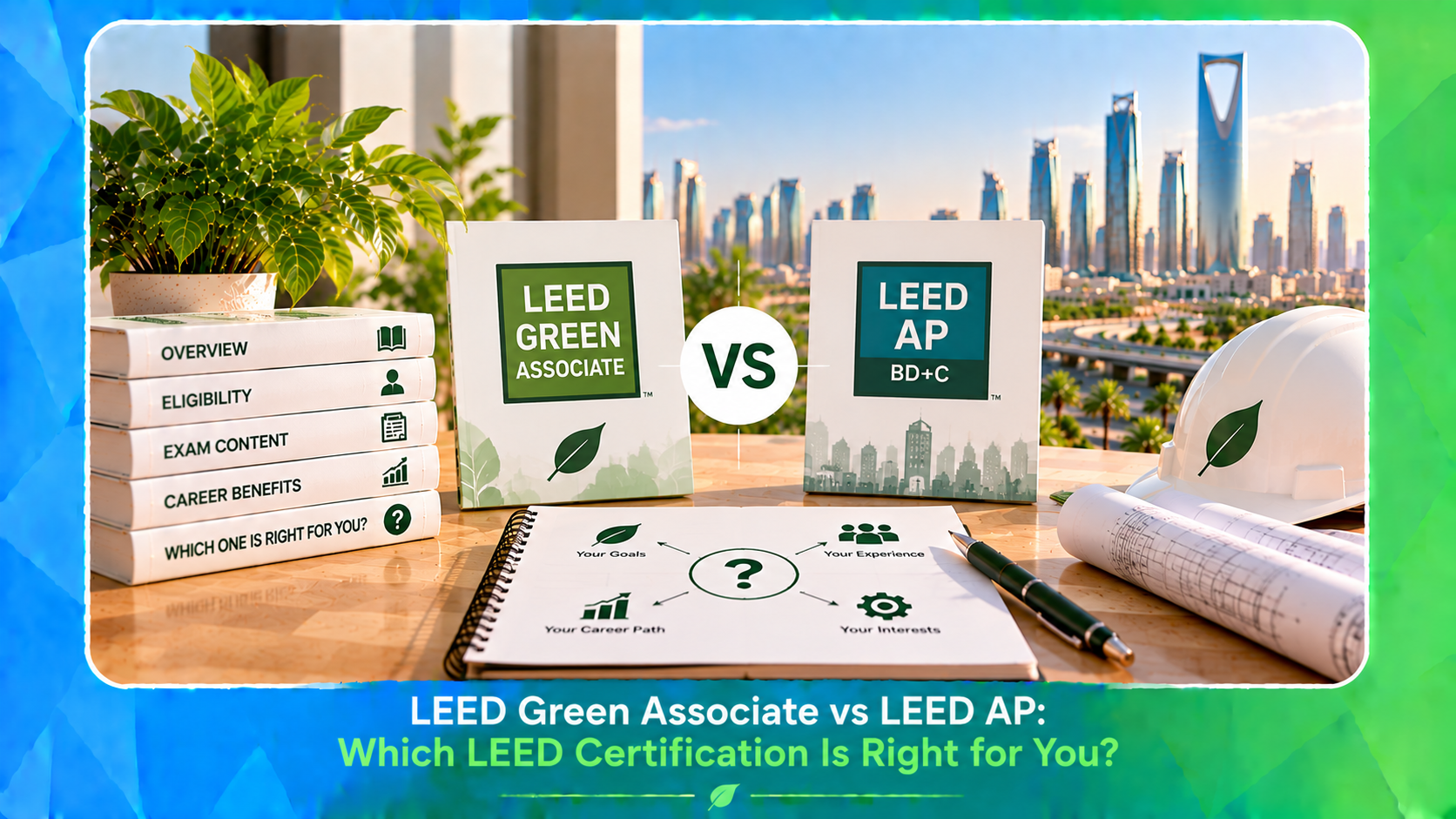
LEED Green Associate vs LEED AP: Which LEED Certification Is Right for You?
Choosing the right LEED credential can be an important step for professionals who want to build a career in sustainable design, green building, and environmental performance. As the demand for sustainable buildings continues to grow, engineers, architects, contractors, project managers, consultants, and sustainability professionals are increasingly looking for certifications that can demonstrate their knowledge and professional commitment.
One of the most common questions among people entering the LEED ecosystem is LEED Green Associate vs LEED AP. Both credentials are valuable, but they serve different purposes and are designed for different stages of professional development.
The LEED Green Associate credential provides a broad foundation in green building principles and the LEED rating system. It is often a suitable starting point for professionals who want to understand sustainable building concepts without immediately specializing in a specific LEED rating system.
LEED AP, on the other hand, represents a more advanced level of knowledge. LEED AP credentials are organized around specific specialties, such as Building Design and Construction. Professionals pursuing LEED AP BD+C typically want to develop deeper expertise that can be applied to real-world LEED projects.
Understanding the difference between these credentials is essential before investing time and money in exam preparation. In this guide, we will compare LEED Green Associate vs LEED AP, including exam difficulty, eligibility, career value, training requirements, and professional opportunities.
We will also explain whether you should start with the LEED Green Associate credential or pursue LEED AP directly, and how to choose the certification that best matches your professional goals.
What Is the LEED Green Associate Credential?
The LEED Green Associate credential is designed to demonstrate foundational knowledge of green building practices and the LEED rating system. It is particularly useful for professionals who want to understand sustainability concepts without necessarily specializing in the technical requirements of a specific LEED project type.
The credential can be relevant to a wide range of professionals, including engineers, architects, contractors, real estate professionals, facility managers, project coordinators, students, and sustainability professionals.
One of the main advantages of the LEED Green Associate credential is its broad scope. Instead of focusing deeply on one project category, preparation introduces candidates to important concepts related to sustainable sites, water efficiency, energy performance, materials, indoor environmental quality, and other fundamental areas of green building.
The LEED Green Associate Exam therefore provides an opportunity to demonstrate that you understand the basic principles behind sustainable building strategies and the LEED certification process.
For professionals who are relatively new to LEED, this credential can provide a structured way to learn the terminology, concepts, and overall framework used in sustainable building projects.
It can also serve as a foundation for professionals who eventually want to pursue an advanced LEED AP credential.
What Is the LEED AP Credential?
The LEED AP Certification represents a more advanced level of professional knowledge within the LEED credentialing system. Unlike the broad foundation provided by LEED Green Associate, LEED AP credentials are associated with specific areas of professional practice.
One of the most relevant specialties for professionals involved in building projects is LEED AP BD+C, which focuses on Building Design and Construction.
The goal of a LEED AP credential is not simply to demonstrate that someone understands sustainability terminology. It reflects a deeper understanding of how LEED concepts and requirements can be applied within the context of actual projects.
This makes LEED AP particularly relevant to professionals who work directly with sustainable design, construction, project management, consulting, or LEED certification processes.
Preparing for the LEED AP Exam generally requires a more advanced study approach. Candidates need to understand concepts in greater depth and develop the ability to analyze project scenarios rather than simply recall definitions.
For an engineer, architect, sustainability consultant, or construction professional who expects to work directly with LEED projects, an advanced credential such as LEED AP BD+C can align more closely with long-term professional goals.
However, the best credential depends on your current experience and career direction. LEED AP is not automatically the right choice for everyone.
LEED Green Associate vs LEED AP: What Is the Main Difference?
The most important difference when comparing LEED Green Associate vs LEED AP is the level and purpose of the credential.
LEED Green Associate is primarily a foundational credential. It helps professionals develop a broad understanding of green building concepts and the LEED framework.
LEED AP is more specialized. It is designed for professionals who want to demonstrate advanced knowledge related to a particular LEED project type or area of practice.
Think of the two credentials as serving different professional needs.
A professional who wants to understand sustainable building principles and add green building knowledge to their resume may find LEED Green Associate to be an appropriate starting point.
A professional who is already working in architecture, engineering, construction, sustainability consulting, or project management may want a more specialized credential that aligns directly with their daily responsibilities.
The difference also appears in the way candidates prepare for the exams. Green Associate preparation generally focuses on broad concepts and the fundamentals of LEED, while LEED AP preparation requires deeper understanding and stronger application skills.
This means that the question should not simply be which certification is better. The more useful question is which certification matches your current professional level and your long-term career objectives.
LEED Green Associate vs LEED AP: Which Exam Is More Difficult?
When researching LEED Green Associate vs LEED AP, exam difficulty is one of the first concerns candidates usually have.
In general, the LEED AP exam requires a deeper level of understanding than the LEED Green Associate exam. The difference is largely related to the level of specialization and application expected from candidates.
Green Associate candidates need to understand fundamental sustainability concepts, LEED terminology, and the general structure and purpose of the rating system.
LEED AP candidates need to go further. They must understand how concepts are applied within a specific project context and be prepared to evaluate scenarios and determine appropriate strategies.
Professional experience can also influence how difficult the exam feels. Someone who has already worked on sustainable building projects may find certain concepts easier to understand because they have encountered similar situations professionally.
On the other hand, someone with limited exposure to green building may need additional time to connect theoretical concepts with practical applications.
The best way to evaluate your readiness is not to focus exclusively on whether the exam is considered difficult. Instead, use practice questions and mock exams to identify your knowledge gaps.
If you can consistently explain why an answer is correct rather than simply recognizing the correct option, you are developing the type of understanding that can support effective exam preparation.
LEED Green Associate vs LEED AP: Eligibility and Requirements
Before choosing between the two credentials, candidates should understand the current eligibility and testing requirements associated with each pathway.
LEED Green Associate is generally positioned as a more accessible entry point into the LEED credentialing system. It can be relevant to professionals who want to demonstrate foundational knowledge of green building without committing to a specialized LEED credential immediately.
LEED AP credentials involve a more advanced level of specialization and preparation. Depending on the credential and the current policies governing the LEED credentialing system, candidates may need to meet specific eligibility or experience requirements.
Because certification policies can change, candidates should always verify the latest requirements with the official credentialing organization before registering for an exam.
From a career planning perspective, however, eligibility should not be the only consideration.
You should also evaluate your professional experience, your current responsibilities, the type of projects you work on, and the type of work you want to pursue in the future.
If you are new to LEED, Green Associate can provide a useful foundation. If you already have relevant experience and a clear specialization, an advanced LEED AP pathway may be more appropriate.
The right decision should therefore be based on both the official requirements and your professional goals.
Which LEED Certification Is Better for Engineers?
For engineers, the choice between LEED Green Associate vs LEED AP largely depends on experience and career direction.
An engineer who is new to sustainable construction may benefit from the broad knowledge provided by LEED Green Associate. It can introduce fundamental concepts related to energy efficiency, water conservation, sustainable materials, indoor environmental quality, and integrated design.
However, engineers who are already involved in building design, construction, project management, or sustainability consulting may want to pursue a more specialized LEED AP credential.
For professionals working on building design and construction projects, LEED AP BD+C can be particularly relevant because it focuses on the application of LEED principles within the design and construction process.
An advanced credential can also help professionals communicate more effectively with architects, contractors, consultants, owners, and other project stakeholders involved in sustainable projects.
Still, certification should complement professional experience rather than replace it.
The strongest professional profile combines technical expertise, real project experience, sustainability knowledge, and a recognized credential.
If you are an engineer deciding between the two, start by asking whether you need broad LEED knowledge or specialized project expertise. That answer will usually make the choice much clearer.
Which LEED Certification Is Better for Architects and Designers?
Architects and designers can benefit from both credentials, but the right choice depends on how closely sustainability is connected to their professional responsibilities.
The LEED Green Associate credential can be useful for architects who want to understand the fundamentals of sustainable design and become familiar with the LEED rating system.
For architects who regularly work on projects pursuing LEED certification, a specialized LEED AP credential may provide greater professional relevance.
This is especially true for professionals involved in building design and construction. Understanding how design decisions affect energy performance, water efficiency, materials, indoor environmental quality, and other sustainability objectives can help architects integrate sustainability earlier into the design process.
Rather than treating LEED requirements as an additional checklist at the end of a project, professionals with deeper knowledge can consider sustainability strategies during early planning and design decisions.
This can also improve communication between design teams and sustainability consultants because the team is working from a shared understanding of LEED concepts.
Therefore, architects who simply want foundational knowledge may find Green Associate appropriate, while those who want to specialize in LEED projects may benefit from pursuing an applicable LEED AP credential.
LEED Green Associate vs LEED AP: Career Opportunities
Both credentials can support a professional career in green building, but they serve different roles within a career development strategy.
The LEED Green Associate Certification can strengthen the profile of professionals who want to demonstrate basic knowledge of sustainable construction and green building practices.
It can be useful for professionals working in engineering, architecture, real estate, construction, facility management, project coordination, or sustainability-related roles.
The LEED AP Certification demonstrates a more specialized level of knowledge and can be particularly relevant to professionals whose work directly involves LEED projects.
Potential professional applications may include sustainability consulting, green building consulting, architectural design, engineering, construction management, project management, and building performance.
However, candidates should not view a LEED credential as an automatic guarantee of employment or career advancement.
The value of certification is strongest when it is combined with practical skills and relevant professional experience.
For example, an engineer with LEED AP BD+C knowledge and real experience contributing to sustainable building projects can present a stronger professional profile than someone who has the credential but no practical understanding of project delivery.
Certification should therefore be considered one part of a larger professional development strategy.
LEED Green Associate vs LEED AP: Which Is Better for Beginners?
For someone completely new to LEED, the LEED Green Associate credential is often a logical starting point because it introduces the broad concepts needed to understand sustainable buildings and the LEED framework.
Beginners can use Green Associate preparation to build familiarity with key terminology and understand how different sustainability strategies contribute to overall building performance.
Jumping directly into an advanced LEED AP specialty without sufficient foundational knowledge can make the learning process more challenging.
However, beginners do not necessarily have to follow the same path.
A professional who already has significant experience in engineering, architecture, construction, or sustainable design may have enough background knowledge to begin preparing for an advanced credential.
The decision should therefore be based on knowledge rather than simply job title.
If you struggle to explain basic LEED concepts, Green Associate preparation may be the better starting point.
If you already understand green building fundamentals and have relevant project experience, you may be ready to consider an advanced LEED AP pathway.
The most effective certification journey is the one that matches your actual knowledge level rather than the one that appears fastest on paper.
LEED Green Associate Course vs LEED AP Course
The training approach should also change depending on whether you are preparing for LEED Green Associate or LEED AP.
A LEED Green Associate Course should focus on building a strong foundation. Candidates should learn the basic principles of green building, understand the LEED framework, and become familiar with the major sustainability concepts covered by the credential.
A LEED AP Course, by comparison, should provide deeper specialization. Candidates need more detailed explanations, practical examples, scenario-based questions, and exam preparation strategies.
Quality training should also help candidates understand why an answer is correct rather than simply provide a list of answers to memorize.
This is particularly important when preparing for advanced exams because the ability to apply knowledge to unfamiliar situations can be more valuable than memorizing isolated facts.
When choosing training, look for updated materials, structured lessons, realistic practice questions, mock exams, and explanations that connect theory with real project applications.
The right course can save significant preparation time by organizing the material into a logical learning path.
Can You Become a LEED AP Without Starting With LEED Green Associate?
One of the most common questions related to LEED Green Associate vs LEED AP is whether candidates must complete the Green Associate credential before pursuing LEED AP.
The answer depends on the specific credential pathway and the current policies and eligibility requirements. Candidates should verify the latest official requirements before registering.
From a learning perspective, however, the question is slightly different.
Even when a professional does not need to follow Green Associate as a mandatory step, the foundational knowledge associated with Green Associate can still be extremely useful.
A candidate with limited LEED experience may benefit from learning the fundamental concepts first, while an experienced sustainability professional may already have the required foundation.
This is why certification planning should consider both eligibility and readiness.
Do not choose Green Associate simply because it is easier, and do not choose LEED AP simply because it sounds more advanced.
Instead, consider your experience, your existing knowledge, the type of projects you work on, and your long-term career goals.
If your final objective is LEED AP BD+C, for example, you can structure your preparation around the knowledge and skills required for that specialty.
How to Choose the Right LEED Certification for Your Career
The best way to choose between LEED Green Associate and LEED AP is to start with your career objective.
If you want to develop a general understanding of green buildings and add sustainability knowledge to your professional profile, the LEED Green Associate credential may be a suitable starting point.
If your goal is to specialize in LEED projects and develop advanced knowledge within a specific project type, then an appropriate LEED AP credential may provide a stronger fit.
You should also consider your current professional responsibilities.
Ask yourself whether you are already involved in sustainable design, building construction, project management, energy performance, environmental consulting, or LEED certification.
Your answer can help determine whether foundational or advanced knowledge will provide more immediate professional value.
Another important factor is your willingness to invest in preparation. Advanced certification typically requires more focused study and a deeper understanding of the subject matter.
Finally, consider where you want your career to be in the next few years.
The right LEED credential should not only match your current position. It should also support the professional direction you want to pursue.
How LEED Tricks Can Help You Prepare for Your LEED Certification
Choosing the right credential is only the first step. Effective preparation requires a structured learning plan, reliable study resources, and consistent practice.
At LEED Tricks, our training approach focuses on helping professionals understand LEED concepts and prepare for certification exams through structured learning and practical exam preparation.
Whether your goal is the LEED Green Associate Exam or an advanced credential such as LEED AP BD+C, preparation should go beyond memorizing definitions.
Candidates should understand the concepts, learn how they apply to real projects, practice analyzing questions, and identify areas that require additional study.
Practice tests and mock exams can also help candidates evaluate their progress and become more comfortable with exam-style questions.
A structured LEED AP Course or LEED Green Associate Course can provide a clear learning path and reduce the time spent searching through disconnected study materials.
If you are serious about building a career in sustainable buildings, investing in the right training can help you develop knowledge that remains useful beyond the exam itself.
Start by identifying the credential that matches your goals, then build a study plan that takes you from foundational knowledge to exam readiness.
LEED Green Associate vs LEED AP: Frequently Asked Questions
What is the difference between LEED Green Associate and LEED AP?
LEED Green Associate is a foundational credential focused on general green building and LEED knowledge. LEED AP is a more advanced credential focused on specialized knowledge related to specific LEED project types or professional areas.
Is LEED AP better than LEED Green Associate?
Neither credential is automatically better. Green Associate can be better for professionals seeking foundational knowledge, while LEED AP may be more suitable for professionals who want advanced specialization.
Is the LEED AP exam harder than the Green Associate exam?
LEED AP generally requires deeper knowledge and stronger application skills because it focuses on more specialized subject matter.
Is LEED Green Associate good for engineers?
Yes. It can be a useful starting credential for engineers who want to develop foundational knowledge in sustainable buildings and LEED.
Is LEED AP useful for engineers?
Yes. Engineers involved in sustainable design, construction, project management, or LEED projects may benefit from an applicable LEED AP specialty.
Do I need LEED Green Associate before LEED AP?
The pathway depends on the current credentialing requirements and the specific LEED AP specialty. Always verify the latest official eligibility requirements before registering.
Which LEED certification is best for engineers?
It depends on the engineer's experience and career goals. Green Associate can be a good starting point for foundational knowledge, while LEED AP can be more suitable for engineers seeking specialized expertise.
Which LEED certification is best for beginners?
LEED Green Associate is generally a logical starting point for professionals who are new to LEED and want to build a broad understanding of sustainable building principles.
Is LEED AP valuable for a career in sustainability?
It can strengthen the professional profile of people working in sustainable design, engineering, construction, consulting, and project management, especially when combined with practical project experience.
Should I take a LEED Green Associate Course or LEED AP Course?
Choose training based on your target credential and current knowledge level. A Green Associate Course should focus on foundational concepts, while a LEED AP Course should provide more specialized and application-focused preparation.
Conclusion: LEED Green Associate vs LEED AP
The choice between LEED Green Associate vs LEED AP ultimately depends on where you are in your professional journey and where you want to go next.
LEED Green Associate is a strong option for professionals who want to build foundational knowledge of green buildings and the LEED rating system. It can be especially useful for beginners and professionals who want to add sustainability knowledge to their existing careers.
LEED AP is designed for professionals who want to take their LEED expertise further and specialize in a specific area of sustainable building practice. For professionals working in building design and construction, LEED AP BD+C can be a particularly relevant pathway.
The best certification is not necessarily the most advanced one. It is the credential that matches your current knowledge, professional experience, and career objectives.
If you are ready to develop your LEED expertise, choose your certification pathway carefully, follow a structured preparation plan, and use high-quality training resources to build both knowledge and exam confidence.
Latest posts
Copyright | LEED-Tricks All Rights Reserved . Made with MiskIts