LEED AP BD+C Exam: The Complete Preparation Guide V5 for Engineers and Green Building Professionals
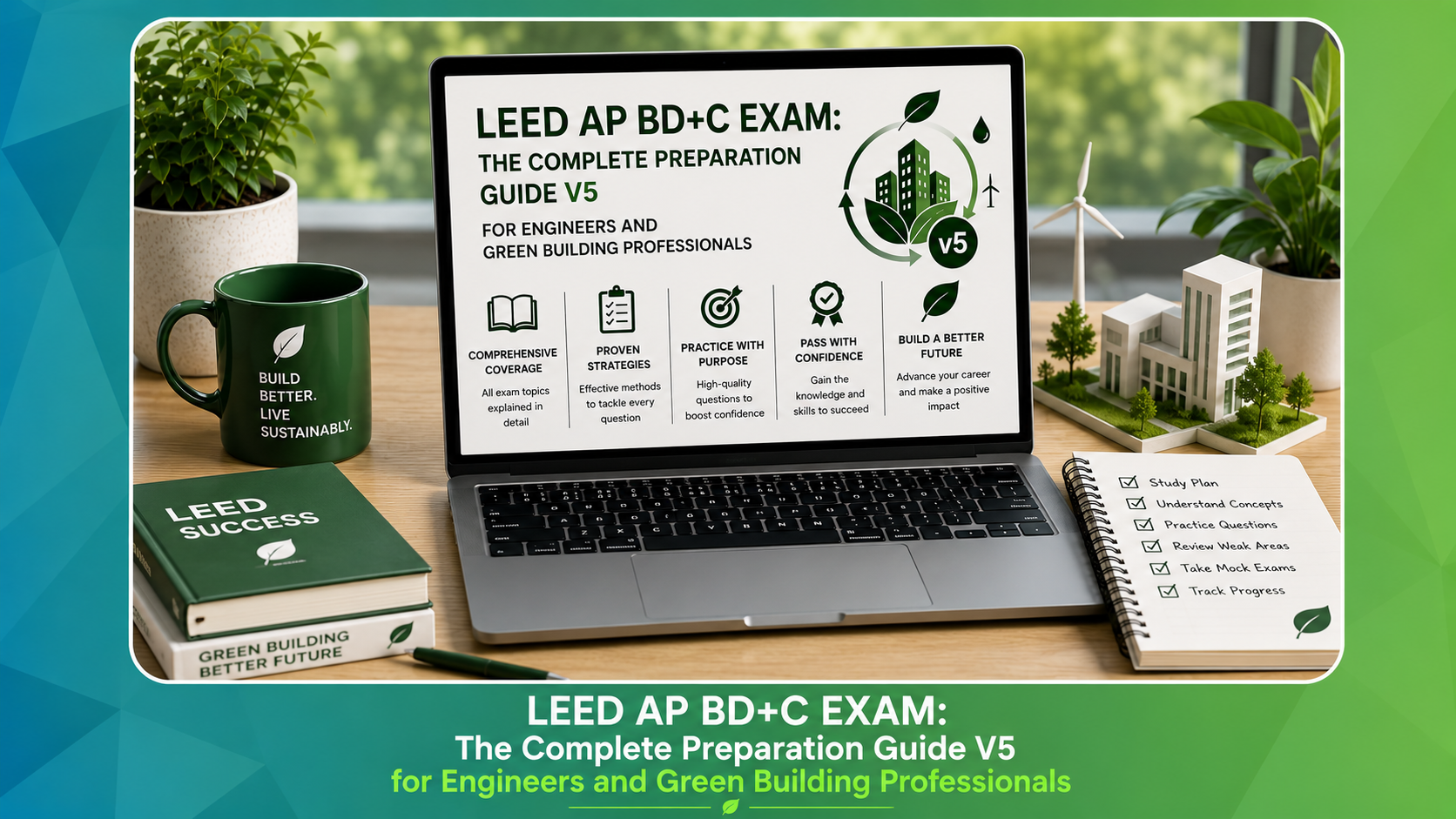
LEED AP BD+C Exam: The Complete Preparation Guide V5 for Engineers and Green Building Professionals
The demand for sustainable buildings has grown rapidly over the past decade, making professional credentials in green building more valuable than ever before. Among these credentials, the LEED AP BD+C Exam stands out as one of the most recognized certifications for architects, engineers, construction professionals, and sustainability consultants who want to demonstrate advanced expertise in the Leadership in Energy and Environmental Design (LEED) rating system.
Unlike introductory sustainability certifications, the LEED AP BD+C Certification validates your ability to apply LEED principles to real-world building design and construction projects. It demonstrates that you understand how to integrate sustainable strategies into every stage of a project, from site selection and energy performance to material selection, indoor environmental quality, and project documentation.
As the industry transitions toward LEED AP BD+C V5, professionals are expected to understand new priorities such as decarbonization, resilience, human health, and building performance. These changes have increased the importance of using an updated LEED AP BD+C Exam Preparation Guide V5 that reflects the latest exam objectives and industry expectations.
Whether you are preparing for your first LEED credential or looking to advance your career after becoming a LEED Green Associate, this comprehensive guide will help you understand the exam structure, eligibility requirements, study strategies, practice resources, and proven techniques that can improve your chances of passing the exam on your first attempt.
What Is the LEED AP BD+C Exam?
The LEED AP BD+C Exam is an advanced professional credential administered by the Green Business Certification Inc. (GBCI). It is specifically designed for professionals working on new construction and major renovation projects who need to demonstrate expertise in applying the LEED Building Design and Construction (BD+C) rating system.
Unlike certifications that focus primarily on sustainability theory, the LEED AP BD+C credential evaluates your ability to make informed decisions throughout the entire building lifecycle. Candidates are expected to understand how different LEED credits interact, how sustainable design strategies affect project outcomes, and how documentation supports successful certification.
The exam is based on practical applications rather than simple memorization. Most questions present real project scenarios that require critical thinking and an understanding of how LEED requirements influence design decisions, construction practices, and long-term building performance. This practical approach explains why the credential is highly respected among employers, developers, engineering firms, and government organizations involved in green building projects.
Earning the LEED AP BD+C Certification also demonstrates your commitment to sustainable development and your ability to contribute effectively to projects pursuing LEED certification. As more governments and private developers adopt green building requirements, professionals with this credential continue to experience growing demand across international markets.
Today, the introduction of LEED AP BD+C V5 further strengthens the credential by incorporating emerging sustainability priorities, including carbon reduction, climate resilience, occupant well-being, and environmental equity. Understanding these evolving concepts is becoming essential for anyone pursuing leadership roles in sustainable construction.
Why Is LEED AP BD+C Certification Important for Engineers?
The construction industry is undergoing one of its most significant transformations as sustainability becomes a central requirement rather than an optional feature. Governments, multinational corporations, and real estate developers increasingly require professionals who understand how to deliver buildings that meet environmental performance goals while maintaining economic value and occupant comfort. This shift has made the LEED AP BD+C Certification one of the most valuable professional credentials available to engineers.
For architects and engineers, earning this certification goes far beyond adding another qualification to a résumé. It demonstrates advanced technical knowledge of green building principles and the ability to participate in every phase of a LEED-certified project. Employers recognize certified professionals as individuals who can contribute to sustainable design decisions, improve project documentation, reduce environmental impacts, and support successful certification outcomes.
The credential is especially valuable for civil engineers, mechanical engineers, electrical engineers, architects, interior designers, project managers, and sustainability consultants. Professionals working in these disciplines often collaborate on integrated project teams where LEED expertise directly influences project performance and certification success.
Another significant advantage is global recognition. Since LEED remains one of the world's most respected green building rating systems, professionals holding the LEED AP BD+C Certification often enjoy broader career opportunities across North America, Europe, the Middle East, and Asia. Whether you plan to work for engineering consultants, construction companies, developers, or government agencies, this credential can strengthen your professional credibility and increase your competitiveness in an evolving marketplace.
Finally, as organizations continue investing in ESG initiatives and sustainable infrastructure, professionals with LEED expertise are increasingly viewed as strategic assets capable of helping companies achieve long-term environmental and business objectives.
LEED Green Associate vs LEED AP: Which Certification Should You Choose?
One of the most common questions professionals ask before beginning their LEED journey is whether they should start with the LEED Green Associate credential or prepare directly for the LEED AP BD+C Exam. Although both certifications are part of the LEED professional credentialing program, they serve different purposes and are designed for different stages of a sustainability career.
The LEED Green Associate credential is considered the foundation of LEED education. It introduces candidates to the core principles of sustainable building, environmental responsibility, integrated design, and the overall LEED rating system. This certification is ideal for students, recent graduates, and professionals who are new to green building or who want to demonstrate a general understanding of sustainability concepts without specializing in a particular project type.
The LEED AP BD+C Certification, however, represents a significantly higher level of expertise. Rather than testing general sustainability knowledge, the LEED AP BD+C Exam evaluates your ability to apply LEED requirements throughout the design and construction process of real building projects. Candidates are expected to understand how different LEED credits interact, how project teams collaborate, and how design decisions influence certification outcomes.
Choosing between these credentials depends largely on your professional experience and career objectives. If you are just entering the sustainability field, becoming a LEED Green Associate provides an excellent knowledge base before advancing to a specialty credential. On the other hand, experienced architects, engineers, project managers, and sustainability consultants who actively participate in building projects often benefit from preparing directly for the LEED AP BD+C Certification, particularly if their goal is to lead or contribute to LEED-certified developments.
Ultimately, these certifications should not be viewed as competitors but as complementary milestones within a long-term professional development pathway. Many successful sustainability professionals begin with the Green Associate credential before progressing to LEED AP BD+C V5, allowing them to build both theoretical knowledge and practical expertise.
What's New in LEED AP BD+C V5?
The release of LEED AP BD+C V5 represents one of the most significant updates to the LEED rating system in recent years. While previous versions emphasized energy efficiency and resource conservation, Version 5 expands its focus to address today's most pressing environmental and social challenges. As climate change, carbon emissions, and human well-being become central concerns within the built environment, LEED has evolved to help professionals design buildings that create measurable long-term value.
One of the most notable changes is the increased emphasis on decarbonization. Rather than simply reducing energy consumption, projects are encouraged to lower operational and embodied carbon throughout the building lifecycle. This reflects the growing global commitment to achieving net-zero carbon buildings and supporting international climate goals.
Another important enhancement is the stronger focus on occupant health and quality of life. LEED AP BD+C V5 recognizes that sustainable buildings should improve the well-being of the people who use them every day. Credits related to indoor air quality, daylight access, thermal comfort, acoustic performance, and healthy materials now play an even more important role in creating high-performing buildings.
The updated framework also places greater importance on resilience and environmental equity. Buildings are expected to respond more effectively to climate risks while supporting diverse communities through inclusive and responsible design strategies. These priorities reflect the industry's growing understanding that sustainability extends beyond environmental performance alone.
Because of these updates, professionals preparing for the LEED AP BD+C Exam should avoid relying exclusively on outdated study materials. Instead, they should use a current LEED AP BD+C Exam Preparation Guide V5 that explains the revised credit structure, emerging sustainability priorities, and updated project requirements. Staying aligned with the latest version ensures that candidates develop knowledge relevant not only to the examination but also to modern green building practice.
Understanding the LEED AP BD+C Exam Structure
Before beginning your preparation, it is essential to understand how the LEED AP BD+C Exam is organized. Many candidates focus heavily on memorizing terminology without fully understanding how the exam measures professional competency. In reality, success depends on applying knowledge to practical situations rather than simply recalling definitions.
The examination evaluates your ability to make informed decisions throughout a building project using the LEED Building Design and Construction rating system. Instead of asking isolated factual questions, the exam frequently presents realistic project scenarios requiring candidates to identify the most appropriate sustainable strategy based on project goals, environmental performance, and LEED requirements.
Candidates should be comfortable working with concepts related to integrated project planning, sustainable site selection, water efficiency, energy optimization, material transparency, indoor environmental quality, innovation strategies, and regional priorities. Understanding how these categories interact within an actual project is far more valuable than memorizing individual credit names.
Time management also plays an important role during the examination. Many scenario-based questions require careful reading and logical analysis before selecting the best answer. Developing these analytical skills through continuous practice is one of the most effective ways to improve overall performance.
A comprehensive LEED AP Study Guide, combined with regular LEED AP BD+C Practice Test sessions, helps candidates become familiar with the exam's structure while improving confidence and reducing anxiety before test day.
LEED AP BD+C Exam Eligibility Requirements
Many professionals assume that extensive industry experience is required before attempting the LEED AP BD+C Exam, but the eligibility process is more flexible than many expect. Although practical experience working on LEED projects is highly recommended, the credential is designed to support professionals at various stages of their careers who are committed to advancing their expertise in sustainable building.
Candidates are encouraged to first obtain the LEED Green Associate credential because it establishes a strong understanding of fundamental LEED concepts. This knowledge provides an excellent foundation before moving to the more specialized LEED AP BD+C Certification. Professionals who already participate in building design, engineering, construction, commissioning, or sustainability consulting often find the transition particularly beneficial because they can immediately apply their learning to real projects.
Successful candidates typically share several characteristics. They understand integrated project delivery, have a basic knowledge of construction processes, and are familiar with environmental performance goals. More importantly, they are willing to think critically rather than rely solely on memorization. Since the examination focuses heavily on practical application, analytical thinking often proves more valuable than simply remembering isolated facts.
Before scheduling your examination, it is advisable to review the most recent requirements published by the certification authorities and ensure your study materials align with LEED AP BD+C V5. Using updated resources helps prevent confusion caused by outdated terminology or superseded credit requirements and significantly improves overall preparation efficiency.
LEED AP BD+C Exam Preparation Guide V5: A Step-by-Step Study Plan
Preparing for the LEED AP BD+C Exam requires much more than reading a textbook or memorizing terminology. The examination is designed to evaluate how well you apply sustainable design principles in real-world building projects rather than simply testing your ability to recall definitions. Because of this practical focus, candidates should develop a structured study strategy that combines theoretical knowledge, practical application, and continuous self-assessment.
An effective LEED AP BD+C Exam Preparation Guide V5 begins with understanding the philosophy behind LEED rather than jumping directly into individual credits. Before studying technical requirements, take time to understand why LEED was created, how sustainable buildings improve environmental performance, and how integrated design influences every stage of a construction project. This foundation makes it much easier to understand the logic behind each credit category later in your preparation.
Once you have mastered the fundamentals, organize your study schedule according to the major LEED categories instead of studying randomly. Focus on one topic at a time, beginning with Integrative Process and progressing through Sustainable Sites, Water Efficiency, Energy and Atmosphere, Materials and Resources, Indoor Environmental Quality, Innovation, and Regional Priority. Studying each category independently allows you to understand how credits relate to one another before combining them into complete project scenarios.
Equally important is maintaining a consistent study routine. Rather than studying for long hours over a short period, most successful candidates dedicate regular weekly sessions over several weeks. This approach improves knowledge retention, reduces stress, and allows enough time for practice exams and review sessions before the official examination.
Finally, every preparation plan should include regular performance evaluations. Reviewing incorrect answers, identifying weak topics, and revisiting difficult concepts are essential habits that significantly improve exam readiness. Consistent improvement—not simply completing the study material—is what ultimately leads to success.
Choosing the Best LEED AP Study Guide
One of the most important decisions you will make during your preparation is selecting the right LEED AP Study Guide. Because the LEED rating system continues to evolve, outdated materials may no longer reflect the latest exam objectives, making it essential to choose resources that align with LEED AP BD+C V5.
A high-quality study guide should do more than summarize technical information. It should explain the reasoning behind each LEED credit, illustrate how sustainability principles are applied throughout the project lifecycle, and connect individual concepts to realistic project situations. Candidates who understand the purpose of each requirement generally perform better than those who rely solely on memorization.
The best study guides also include diagrams, workflow explanations, terminology reviews, and chapter-based practice questions that reinforce learning after every topic. These features help transform complex technical requirements into practical knowledge that can be applied during the examination.
Another important characteristic of an effective study guide is clarity. Sustainable design involves numerous technical concepts, but these concepts should be explained using logical examples that reflect how multidisciplinary project teams collaborate in actual LEED-certified developments. Resources that combine technical accuracy with practical explanations often provide the strongest preparation experience.
Before selecting any study material, verify that it references the latest LEED version and incorporates current sustainability priorities such as decarbonization, resilience, occupant health, and environmental equity. Using updated resources ensures that your preparation reflects today's professional expectations rather than outdated certification requirements.
Why Professional LEED AP Training Makes a Difference
Although independent study can be effective for highly disciplined learners, many candidates find that structured LEED AP Training accelerates their preparation and improves their overall confidence. Professional training provides organized learning pathways that eliminate unnecessary trial and error while ensuring every major exam objective receives appropriate attention.
One of the greatest advantages of instructor-led training is the opportunity to learn from professionals who have participated in actual LEED-certified projects. Their practical experience often provides insights that cannot be found in books alone. Understanding why certain sustainable strategies succeed—or fail—helps candidates think more like project professionals rather than exam candidates.
A comprehensive LEED AP Course also introduces realistic case studies that demonstrate how different LEED credits interact within complete building projects. Instead of studying categories in isolation, learners begin seeing the integrated nature of sustainable design, which closely mirrors the analytical thinking required during the examination.
Professional training programs frequently include structured study schedules, progress assessments, discussion sessions, downloadable learning materials, and instructor feedback. These features help candidates remain motivated while ensuring that difficult topics receive additional attention before examination day.
Perhaps most importantly, quality training programs continue evolving alongside the LEED rating system. As LEED AP BD+C V5 introduces new sustainability priorities, professionally developed courses are typically updated much faster than independently created learning materials, allowing candidates to prepare using current industry standards.
LEED AP Course: What Should You Expect?
Not every LEED AP Course provides the same learning experience. Some courses focus primarily on theoretical presentations, while others emphasize practical application through project-based learning and examination practice. Choosing the right course can significantly influence both your examination performance and your long-term professional development.
A comprehensive preparation course should begin by explaining the overall structure of LEED before gradually exploring each credit category in detail. Every topic should be supported with practical examples, diagrams, and realistic project scenarios that demonstrate how sustainability decisions influence certification outcomes.
High-quality courses also provide continuous opportunities for self-assessment. Short quizzes, chapter reviews, interactive discussions, and progress tracking help learners identify weaknesses before they become significant obstacles. This continuous feedback allows candidates to adjust their study strategy throughout the preparation process rather than waiting until the final review.
The strongest programs also recognize that examination success depends on confidence as much as knowledge. As a result, they incorporate exam simulations, time management strategies, and question analysis techniques that help candidates approach the examination with greater certainty and reduced anxiety.
For professionals balancing work responsibilities with exam preparation, flexible online learning has become increasingly valuable. Being able to review recorded sessions, revisit difficult topics, and study according to a personalized schedule makes preparation more practical without compromising learning quality.
LEED AP BD+C Practice Test: Why Practice Exams Are Essential for Success
One of the biggest mistakes candidates make while preparing for the LEED AP BD+C Exam is spending too much time reading and not enough time applying what they have learned. Understanding the theory behind the LEED rating system is important, but passing the exam requires much more than remembering definitions or credit names. You must be able to analyze project scenarios, evaluate multiple options, and select the solution that best aligns with LEED requirements.
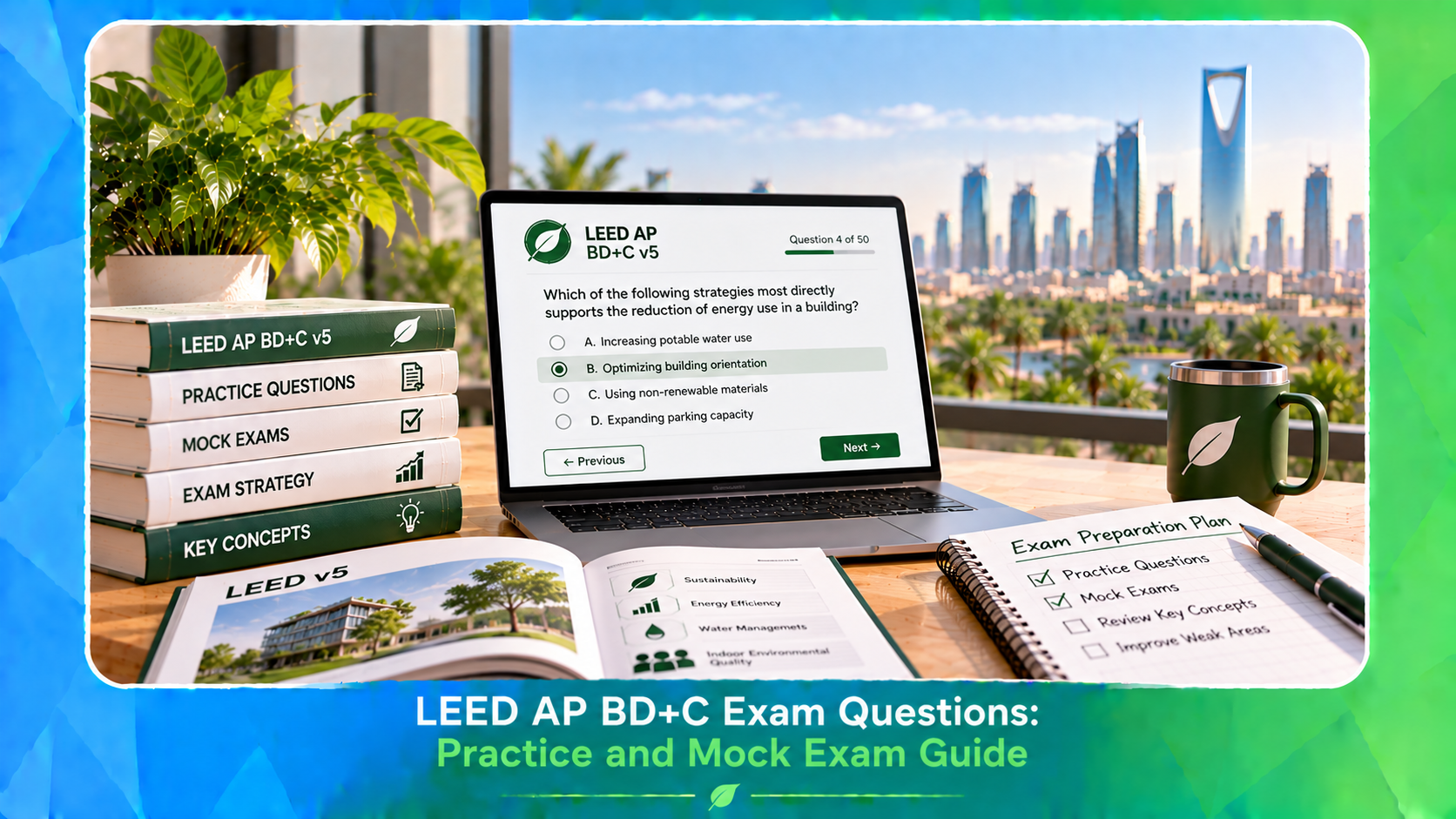
This is where a high-quality LEED AP BD+C Practice Test becomes one of the most valuable preparation tools. Practice exams expose you to the style, difficulty level, and logical structure of real examination questions. More importantly, they help you develop the decision-making skills that the certification exam is designed to evaluate.
Every practice session provides an opportunity to identify knowledge gaps before they become problems on exam day. Instead of simply checking whether an answer is correct or incorrect, successful candidates analyze why each option was right or wrong. This review process strengthens conceptual understanding and improves long-term retention far more effectively than repeated reading.
Another major benefit is time management. Many candidates know the correct answers but struggle to finish the examination within the available time. Regular practice under realistic exam conditions improves reading speed, decision-making, and confidence while reducing unnecessary stress during the official examination.
Rather than treating practice exams as a final review activity, incorporate them throughout your entire study journey. Completing shorter quizzes after each study topic and gradually progressing to full-length practice exams creates continuous feedback that supports consistent improvement.
LEED AP BD+C Mock Exam: Simulating the Real Testing Experience
A LEED AP BD+C Mock Exam is more than a collection of sample questions. It is a complete simulation of the official examination environment, designed to prepare candidates both academically and psychologically. While study guides teach concepts, mock exams teach performance.
Completing full-length mock examinations helps candidates become comfortable with the pace and structure of the real test. Reading lengthy scenario-based questions, managing time effectively, and maintaining concentration for the entire examination period are skills that improve only through repeated practice.
Mock exams also reveal patterns in individual performance. Some candidates consistently lose marks in Energy and Atmosphere, while others struggle with Materials and Resources or Integrated Process. Identifying these trends allows you to focus your revision on areas that will have the greatest impact on your final score.
Perhaps the greatest advantage of realistic exam simulations is the confidence they build. Candidates who have completed several full mock exams typically approach the official test with greater composure because the overall experience already feels familiar. Confidence reduces exam anxiety, supports better decision-making, and often leads to stronger overall performance.
For this reason, many experienced instructors recommend completing multiple mock examinations during the final weeks before your scheduled LEED AP BD+C Exam, reviewing every answer carefully, and revisiting weak topics until consistent improvement is achieved.
Expert LEED AP Exam Tips to Maximize Your Success
Although every candidate follows a different study path, successful professionals often share similar preparation habits. Developing the right strategy is frequently more important than simply increasing study hours.
Start your preparation early and build a realistic study schedule that fits your professional responsibilities. Consistency is far more effective than occasional intensive study sessions. Even one focused hour each day produces better long-term retention than attempting to learn everything during the final week.
Avoid memorization without understanding. The LEED AP Exam evaluates your ability to apply sustainable design principles rather than recall isolated facts. Whenever you study a LEED credit, ask yourself why it exists, what environmental challenge it addresses, and how it contributes to overall building performance.
Regularly review your mistakes instead of celebrating correct answers. Every incorrect response represents an opportunity to strengthen your understanding before the official examination. Candidates who actively learn from their errors often improve much faster than those who simply complete additional reading.
Finally, remember that the examination measures professional judgment. Throughout your preparation, try to think like a sustainability consultant working on a real building project rather than a student preparing for a multiple-choice test. This mindset shift often makes complex questions significantly easier to answer.
Why Choose LEED Tricks for Your LEED AP BD+C Exam Preparation?
Choosing the right training provider can have a significant impact on both your exam performance and your long-term professional growth. At LEED Tricks, we believe that successful preparation goes beyond helping candidates pass an exam. Our objective is to develop professionals who understand how sustainable design principles are applied throughout real building projects and who can confidently contribute to high-performing, LEED-certified developments.
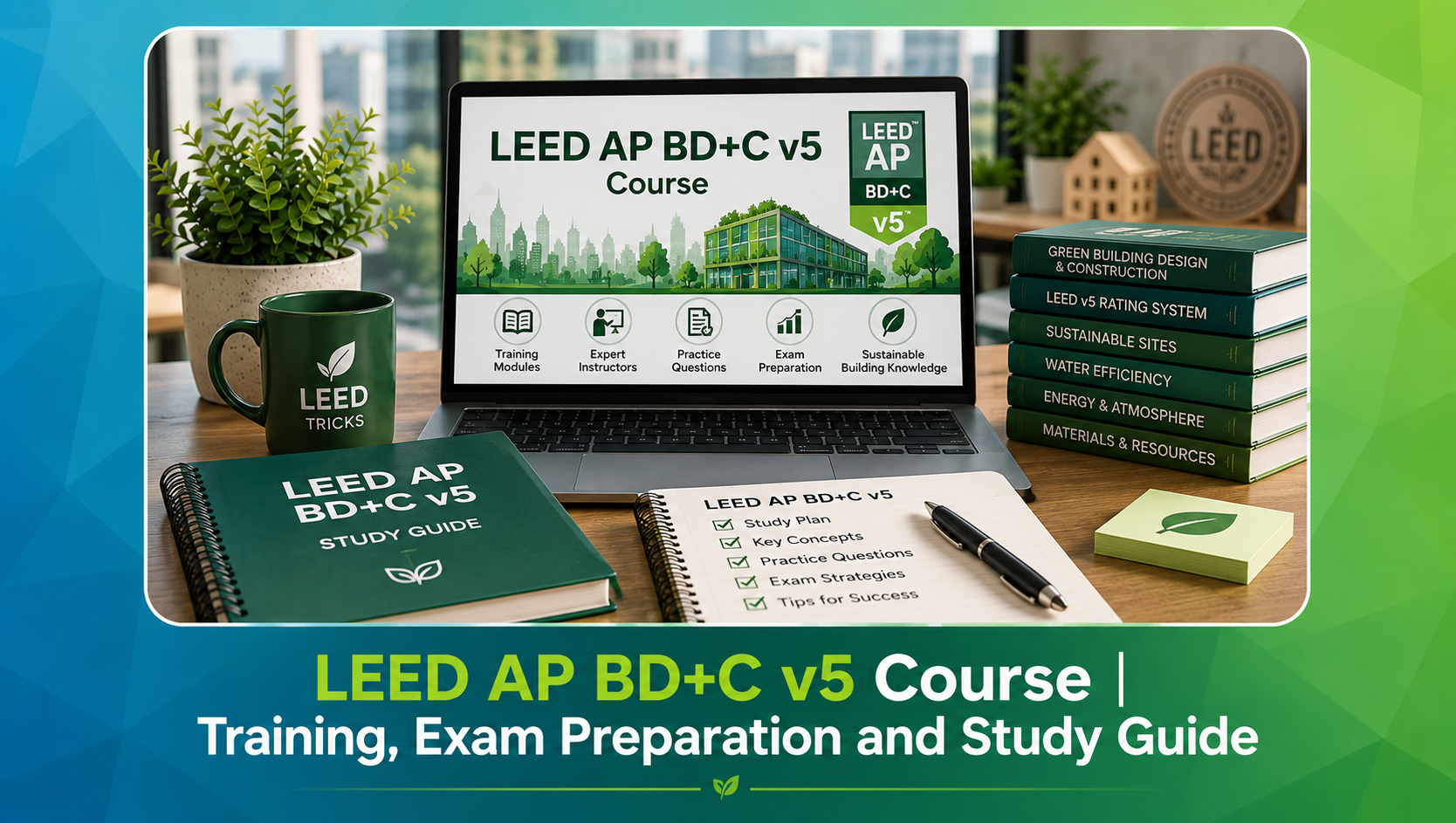
Our LEED AP Course is continuously updated to reflect the latest LEED AP BD+C V5 requirements, ensuring that every lesson aligns with current industry standards rather than outdated certification objectives. Instead of relying solely on theoretical presentations, we combine structured explanations with practical project examples, case studies, interactive discussions, and examination-focused learning strategies that help candidates understand both the technical requirements and the reasoning behind them.
Learners also gain access to comprehensive study resources, chapter-based assessments, realistic LEED AP BD+C Practice Tests, and full LEED AP BD+C Mock Exams that closely simulate the official testing experience. These resources are designed to build confidence, strengthen analytical thinking, and improve time management before examination day.
Beyond the course itself, LEED Tricks provides continuous learning support throughout your preparation journey. Whether you need clarification on a complex LEED credit, guidance on study planning, or additional practice materials, our goal is to help you stay focused, motivated, and fully prepared for certification success.
The LEED AP BD+C Exam is more than a professional certification—it is a career investment that demonstrates advanced expertise in sustainable building design and construction. As green building standards continue evolving worldwide, organizations increasingly seek professionals who can integrate sustainability into every stage of project delivery while balancing environmental performance, occupant well-being, and long-term operational efficiency.
Achieving the LEED AP BD+C Certification requires commitment, structured preparation, and the willingness to think beyond memorization. By combining an updated LEED AP BD+C Exam Preparation Guide V5, a reliable LEED AP Study Guide, professional LEED AP Training, and consistent practice through LEED AP BD+C Practice Tests and Mock Exams, candidates can significantly improve their confidence and maximize their chances of passing the examination on the first attempt.
Whether you are beginning your sustainability journey or advancing your professional credentials, investing in the right preparation today can open the door to exciting career opportunities in the rapidly growing green building industry.
Frequently Asked Questions (FAQ)
What is the LEED AP BD+C Exam?
The LEED AP BD+C Exam is a professional certification exam that validates advanced knowledge of sustainable building design and construction using the LEED rating system.
Who should take the LEED AP BD+C Exam?
The exam is ideal for architects, civil engineers, mechanical engineers, electrical engineers, interior designers, construction managers, project managers, and sustainability consultants involved in green building projects.
Is LEED Green Associate required before LEED AP BD+C?
It is strongly recommended because it provides the foundational knowledge needed for advanced LEED specialties. Candidates should always review the latest official eligibility requirements before registering.
How difficult is the LEED AP BD+C Exam?
The exam is considered challenging because it focuses on applying concepts in realistic project scenarios rather than testing simple memorization. Consistent preparation and practice significantly improve the likelihood of success.
How should I prepare for the LEED AP BD+C Exam?
The most effective approach combines an updated LEED AP BD+C Exam Preparation Guide V5, a comprehensive LEED AP Study Guide, instructor-led training, and multiple practice and mock exams.
What is the difference between a Practice Test and a Mock Exam?
A Practice Test focuses on reinforcing knowledge after studying specific topics, while a Mock Exam replicates the complete testing experience under timed conditions.
Is LEED AP BD+C Certification recognized internationally?
Yes. The credential is respected worldwide and is highly valued by employers involved in sustainable design, construction, engineering, and environmental consulting.
How long should I study before taking the exam?
Preparation time varies depending on your professional experience and familiarity with LEED concepts. Most successful candidates follow a structured study plan over several weeks while completing regular practice assessments.
Latest posts
Copyright | LEED-Tricks All Rights Reserved . Made with MiskIts