What is LEED Certification?
What is LEED Certification?
As sustainability becomes a top priority in the construction industry, green building certifications have become essential for developers, architects, engineers, and property owners. Among the most recognized and respected sustainability standards worldwide is LEED certification. It provides a comprehensive framework for designing, constructing, operating, and maintaining environmentally responsible buildings that improve energy efficiency, reduce environmental impact, and create healthier indoor spaces for occupants.
What is LEED Certification?
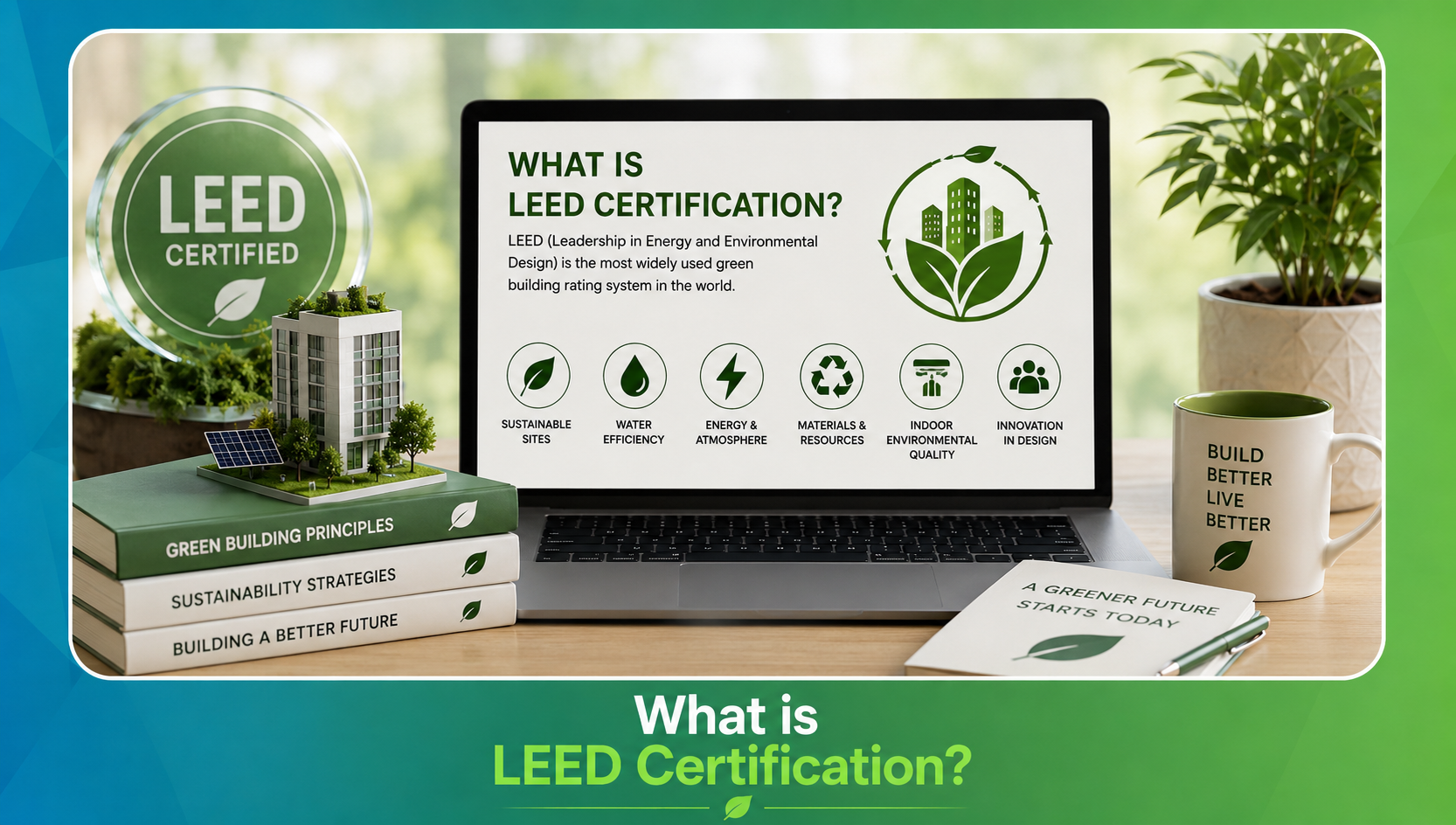
LEED (Leadership in Energy and Environmental Design) certification is a globally recognized green building certification system developed by the U.S. Green Building Council (USGBC). It evaluates how well a building or project performs across several sustainability categories, including energy efficiency, water conservation, indoor environmental quality, material selection, waste reduction, and sustainable site development.
Rather than focusing on a single aspect of sustainability, LEED certification uses a points-based rating system. Projects earn points by implementing sustainable design and operational strategies throughout the building lifecycle. Based on the total number of points achieved, a project is awarded one of four certification levels:
- Certified
- Silver
- Gold
- Platinum
The higher the score, the greater the building's environmental performance and sustainability achievements.
LEED certification applies to a wide variety of project types, including commercial buildings, residential developments, hospitals, schools, hotels, warehouses, retail spaces, data centers, and even entire neighborhoods. It also supports both new construction and existing buildings undergoing renovation or operational improvements.
One of the key objectives of LEED is to reduce carbon emissions while creating healthier, more comfortable environments for building occupants. Certified buildings typically consume less energy and water, produce less waste, improve indoor air quality, and lower long-term operating costs. These benefits make LEED certification valuable not only from an environmental perspective but also from financial and business standpoints.
Today, LEED is recognized in more than 180 countries and is considered one of the world's leading standards for sustainable building design and environmental performance. Organizations pursuing LEED certification often enhance their corporate reputation, increase property value, attract environmentally conscious tenants and investors, and demonstrate a strong commitment to sustainability and climate responsibility.
What is LEED?
As sustainability continues to reshape the construction industry, professionals and organizations increasingly rely on trusted frameworks to create environmentally responsible buildings. One of the most influential sustainability systems worldwide is LEED, which has become the benchmark for green building excellence.
What is LEED?
LEED (Leadership in Energy and Environmental Design) is the world's leading green building rating system developed by the U.S. Green Building Council (USGBC). It provides a globally recognized framework for designing, constructing, operating, and maintaining sustainable, high-performance buildings.
LEED encourages project teams to adopt environmentally responsible practices that improve energy efficiency, reduce water consumption, minimize waste, lower carbon emissions, and enhance indoor environmental quality. Rather than prescribing a single design approach, LEED offers a flexible, points-based system that allows projects to earn credits across multiple sustainability categories.
Today, LEED is used in more than 180 countries and applies to various project types, including commercial buildings, residential developments, schools, healthcare facilities, data centers, retail spaces, and entire communities. Its widespread adoption has made LEED the international standard for measuring building sustainability and environmental performance.
What is LEED Certification?
Achieving sustainability goals requires more than simply following green building practices. Organizations often seek independent verification that their projects meet internationally recognized environmental standards. This is where LEED certification plays a vital role.
What is LEED Certification?
LEED certification is the official recognition awarded to buildings and projects that successfully meet the sustainability requirements established by the LEED rating system. Certification verifies that a project has been independently evaluated and demonstrates measurable performance in key environmental areas.
Projects earn points by implementing sustainable strategies related to energy efficiency, water conservation, sustainable site development, materials selection, indoor environmental quality, waste reduction, transportation, and innovation. The total number of points determines one of four certification levels:
- Certified
- Silver
- Gold
- Platinum
Obtaining LEED certification demonstrates an organization's commitment to sustainability while providing numerous benefits, including reduced operating costs, improved occupant health, enhanced building value, stronger environmental performance, and increased market competitiveness.
How and Why Does LEED Evolve?
The building industry is constantly changing as new technologies, environmental challenges, and scientific research emerge. To remain effective and relevant, LEED continuously evolves to reflect the latest advancements in sustainable design and construction.
How and Why Does LEED Evolve?
LEED evolves through a collaborative development process led by the U.S. Green Building Council (USGBC) with input from architects, engineers, sustainability experts, manufacturers, building owners, policymakers, and other industry stakeholders worldwide.
Each new version incorporates updated scientific research, improved building technologies, evolving environmental regulations, and market feedback. The goal is to ensure that LEED continues to address today's most pressing sustainability challenges, including climate change, carbon reduction, biodiversity, resilience, occupant health, social equity, and resource conservation.
For example, LEED v5 places greater emphasis on decarbonization, climate resilience, ecosystem protection, and human well-being compared to previous versions. These updates help ensure that certified buildings continue to meet modern environmental expectations while supporting global sustainability goals.
By evolving regularly, LEED remains one of the most trusted and forward-looking green building standards in the world.
What is Green Building?
A green building is a structure that is designed, constructed, operated, and maintained to minimize its environmental impact while maximizing efficiency, occupant health, and long-term performance. Green buildings use resources responsibly by reducing energy consumption, conserving water, selecting sustainable materials, minimizing waste, and lowering greenhouse gas emissions.
In addition to protecting the environment, green buildings create healthier indoor spaces through improved ventilation, better air quality, increased natural lighting, thermal comfort, and reduced exposure to harmful materials. These improvements contribute to higher occupant satisfaction, productivity, and overall well-being.
Green building principles can be applied to virtually any type of project, including homes, offices, hospitals, schools, hotels, factories, and public infrastructure. Certification systems such as LEED provide internationally recognized frameworks that help project teams measure, verify, and improve the sustainability performance of their buildings.
As governments and organizations continue to pursue climate action and sustainable development goals, green building has become an essential strategy for reducing environmental impact while delivering long-term economic and social benefits.
Latest posts
Copyright | LEED-Tricks All Rights Reserved . Made with MiskIts