LEED v5 Course: Your Complete Guide to Earning the LEED Green Associate Certification

LEED v5 Course: Your Complete Guide to Earning the LEED Green Associate Certification
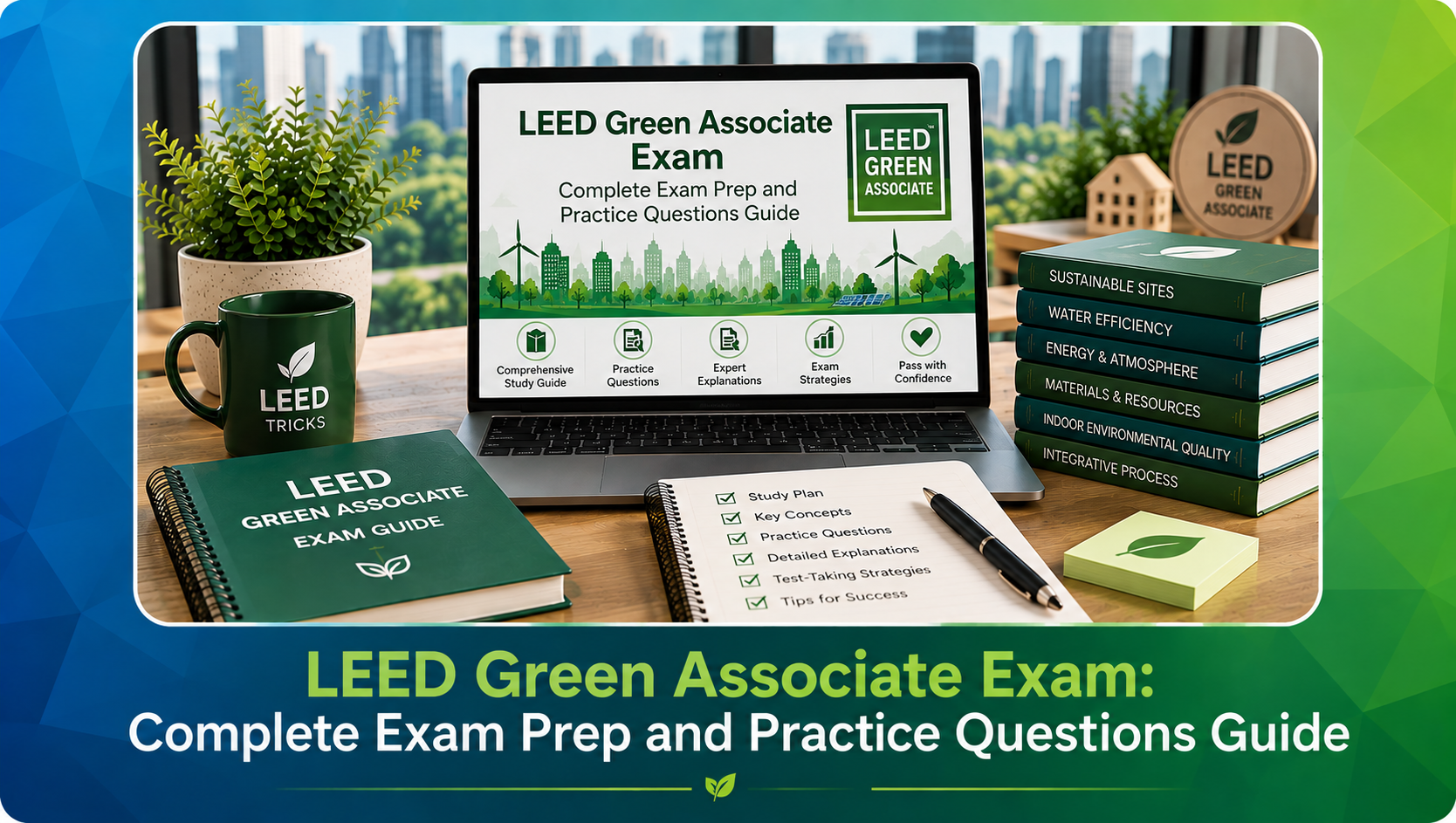
The LEED v5 course is considered the most important step for anyone looking to professionally enter the world of sustainability and green building—especially with the latest updates introduced in the fifth version of the LEED system. If you aim to earn the LEED Green Associate certification and build a strong career path in sustainable building, this guide will provide everything you need to get started with confidence.
In this article, you will learn about:
- What the LEED v5 course is and its importance in the job market
- The difference between LEED v4 and LEED v5
- The best ways to prepare for the LEED Green Associate exam
- Resources and courses that help you pass on your first attempt
- Career opportunities after earning the certification
Whether you are an engineer, a student, or even a beginner in the green building field, understanding the LEED v5 course content will give you a strong competitive edge and bring you one step closer to real career advancement.
Start your learning journey now and get ready to pass the exam with confidence and achieve professional success in one of the fastest-growing industries in the world.
What is the LEED v5 Course and Why is it Important in 2026?
The LEED v5 course is the latest training path designed to help you understand sustainability systems in construction according to the newest LEED updates. It represents a natural evolution of previous certification models aimed at improving building efficiency and reducing environmental impact even further.
This course is essential for anyone targeting the LEED Green Associate certification, especially with the rapid global changes in green building standards.
LEED v5 Explained
LEED v5 is an advanced update to the green building rating system, with a stronger focus on:
- Deep carbon emission reduction
- More precise energy efficiency
- Improved quality of life within buildings
- Encouraging innovation in sustainable design
This version goes beyond basic principles by expanding the evaluation scope to include the building’s impact on both the environment and society, aligning closely with global sustainability goals for 2026 and beyond.
Difference Between LEED v4 and LEED v5
The main difference lies in depth and focus:
- LEED v4: Focuses on fundamentals like energy efficiency, water usage, and indoor environmental quality
- LEED v5: Expands to include deeper carbon footprint analysis and full lifecycle sustainability
In other words, LEED v4 lays the foundation, while LEED v5 builds on it with more advanced and rigorous standards—making it essential for anyone pursuing a LEED certification or advancing in the field.
Importance of the Certification in the Job Market
Having knowledge of LEED v5 or earning a related certification has become a major advantage in today’s job market, especially in engineering, construction, and project management sectors.
Key benefits include:
- Increased job opportunities in sustainability-driven companies
- Stronger chances for career advancement in engineering fields
- Gaining a globally recognized professional credential
- Access to international projects applying sustainable building standards
With the growing global shift toward green buildings in 2026, learning LEED v5 is no longer optional—it’s a necessity for building a strong career in this rapidly growing field.
What Will You Learn in the LEED Green Associate Course?
The LEED Green Associate course—also known as a LEED training course for engineers—is the foundation for understanding sustainability and green building professionally. It focuses on both theoretical knowledge and practical application.
Sustainability Concepts
You will learn:
- What green building means and why it is globally important
- Principles of reducing environmental impact
- Balancing design with environmental efficiency
- The role of sustainable materials in reducing waste
Energy and Water
This section covers resource management, including:
- Improving building energy efficiency
- Reducing electricity consumption through smart solutions
- Water conservation strategies
- Water reuse and waste reduction techniques
Indoor Environmental Quality
You will explore:
- Indoor air quality
- Natural and mechanical ventilation
- Natural lighting and its effect on productivity
- Reducing indoor pollutants and harmful materials
This knowledge helps you understand how sustainable design directly impacts human health.
Features of the Best LEED v5 Online Course
Interactive Learning
Top courses use interactive methods such as:
- Step-by-step explanations
- Real-world project examples
- Linking theory to exam practice
- Simplifying sustainability concepts for beginners
Mock Exams
Mock exams help you:
- Understand the real exam format
- Improve time management
- Identify weak areas
- Build confidence
Direct Support
Professional courses provide:
- Q&A support during study
- Guidance from LEED experts
- Study plan assistance
- Quick clarification of misunderstandings
Bilingual Content (Arabic + English)
Benefits include:
- Easier understanding of technical terms
- Simplified explanations for beginners
- Better alignment with exam language
- Reduced complexity of technical material
How to Prepare for the LEED v5 Exam Successfully
Study Plan
- Start with green building fundamentals
- Study one topic weekly (energy, water, materials, etc.)
- Use summaries and flashcards
- Practice after each section
- Dedicate the final week to revision and mock exams
Study Hours
- Beginners: 30–50 hours
- Less if you have prior experience
- Focus on consistency over quantity
Best Resources
- Official LEED Green Associate guide
- Certified LEED v5 books
- Interactive online courses
- Platforms like LEED Tricks
LEED GA Exam Questions and How to Solve Them
Question Types
- Multiple choice
- Scenario-based
- Comparison questions
- Energy, water, and indoor quality topics
Solving Strategies
- Identify keywords
- Eliminate incorrect answers
- Focus on concepts, not memorization
- Think from a sustainability perspective
- Practice regularly
Common Mistakes
- Memorizing without understanding
- Skipping mock exams
- Poor time management
- Confusing concepts
- Choosing answers without analysis
Is LEED v5 Suitable for Beginners?
Yes, it is designed for beginners and starts from scratch.
Does it Require Experience?
No. Suitable for:
- Students
- Fresh graduates
- Non-specialists
Is it Only for Engineers?
No. Suitable for:
- Architects
- Interior designers
- Project managers
- Anyone interested in sustainability
Best LEED v5 Online Course (Recommendation)
If you’re looking for the best LEED v5 course to pass from your first attempt, choosing the right platform is crucial.
One of the strongest options is LEED Tricks:
https://leedtricks.com/
Course Features
- Simplified and structured explanations
- Beginner-friendly content
- Direct link to real exam format
Practice & Questions
- Hundreds of practice questions
- Full mock exams
- Answer analysis
Support
- Continuous guidance
- Q&A access
- Study plan tracking
Interactive Experience
- Real examples
- Smart content structure
- Flashcards and review tools
LEED v5 Course Price – Is It Worth It?
Prices range from $400 to $900, depending on:
- Content depth
- Support level
- Training format
Price Categories
- Budget: recorded content + practice
- live + support
- Professional: full training + coaching + certification
Career ROI
The certification opens doors in:
- Architecture
- Construction
- Project management
- Environmental consulting
- Real estate development
It also boosts career advancement and salary potential, especially in Gulf countries.
What is the LEED v5 exam?
An international exam measuring your understanding of green building and sustainability.
How long does it take to study?
30–50 hours on average.
Is the exam difficult?
Not if you prepare properly.
Can I study online?
Yes, fully online—including the exam via remote proctoring.
Conclusion
The LEED v5 course is your gateway into the world of sustainability. With the right strategy, resources, and training, you can pass the LEED Green Associate exam from your first attempt and build a strong, future-proof career in green building.
LEED v5 The Latest Standard for Sustainable Building Design and Operations
LEED v5 introduces a new standard for evaluating and certifying sustainable buildings and is currently available for BD+C, ID+C, and O+M rating systems. The new version aims to guide the building industry toward a lower-carbon, more equitable, and more resilient future, with a focus on three key areas: Decarbonization, which addresses emissions from building operations, materials, transportation, and refrigerants; Quality of Life, which promotes health, well-being, resilience, and equity; and Ecological Conservation and Restoration, which focuses on protecting and restoring ecosystems.
LEED v5 also updates the requirements of its rating systems to better reflect current market needs and connects performance metrics and data throughout the building life cycle, from design and construction through operation and maintenance. In addition, new requirements have been introduced for achieving the LEED Platinum level, with a particular focus on energy efficiency, carbon emissions, and the use of renewable energy.
Frequently Asked Questions About LEED v5
What is LEED v5?
LEED v5 is the latest version of the LEED rating and certification system for sustainable buildings. It introduces advanced requirements focused on reducing carbon emissions, improving quality of life, and protecting and restoring the environment and ecosystems.
Which LEED rating systems are available under LEED v5?
LEED v5 is currently available for BD+C, ID+C, and O+M rating systems, while LEED v5 for Cities is still under development.
What are the main goals of LEED v5?
LEED v5 focuses on three primary areas: reducing carbon emissions, improving health, well-being, resilience, and equity, and conserving and restoring ecosystems.
What is the difference between LEED v4 and LEED v5?
LEED v5 introduces more advanced requirements designed to address current challenges in the sustainable building sector, with a stronger focus on carbon, energy efficiency, data, and performance throughout the building life cycle. The new version also follows a five-year development cycle.
Is LEED v5 available for new buildings?
Yes. LEED v5 includes the BD+C rating system, which covers new construction, major renovations, and Core and Shell Development projects.
Can LEED v5 be used for existing buildings?
Yes. LEED v5 is available under the Building Operations and Maintenance O+M rating system, which is designed for existing buildings and their operation and maintenance processes. It also includes guidance for recertification.
What are the main focus areas of LEED v5?
The main focus areas are Decarbonization, which aims to reduce emissions; Quality of Life, which focuses on improving health, well-being, equity, and resilience; and Ecological Conservation and Restoration, which aims to reduce environmental degradation and support ecosystem restoration.
Are there new requirements for achieving LEED Platinum under LEED v5?
Yes. LEED v5 introduces new requirements for the Platinum level, with a focus on energy efficiency, carbon emissions, and renewable energy use.
Have LEED exam requirements changed with LEED v5?
Yes. LEED professional credential exams have been updated to align with LEED v5, including the LEED Green Associate and LEED AP exams and their relevant specialties.
What is the best way to prepare for the LEED v5 exam?
It is recommended to start by studying the rating system relevant to your specialty and reviewing the Reference Guide, Credit Library, and Scorecard. You should also use appropriate exam preparation resources and practice questions. USGBC states that the current LEED Green Associate exam is based on LEED v5.
Is LEED v5 the latest version of LEED?
Yes. LEED v5 is the latest version of the LEED standard for commercial buildings and has been launched for the BD+C, ID+C, and O+M rating systems.
Where can I study LEED v5 and prepare for the exam?
You can use the official LEED v5 guides, Credit Library, and Scorecards, in addition to specialized preparation courses and practice exams that can help you understand the rating system requirements and prepare effectively for the exam.
Latest posts
Copyright | LEED-Tricks All Rights Reserved . Made with MiskIts