LEED v4 Energy Update Basics: A Complete Beginner's Guide
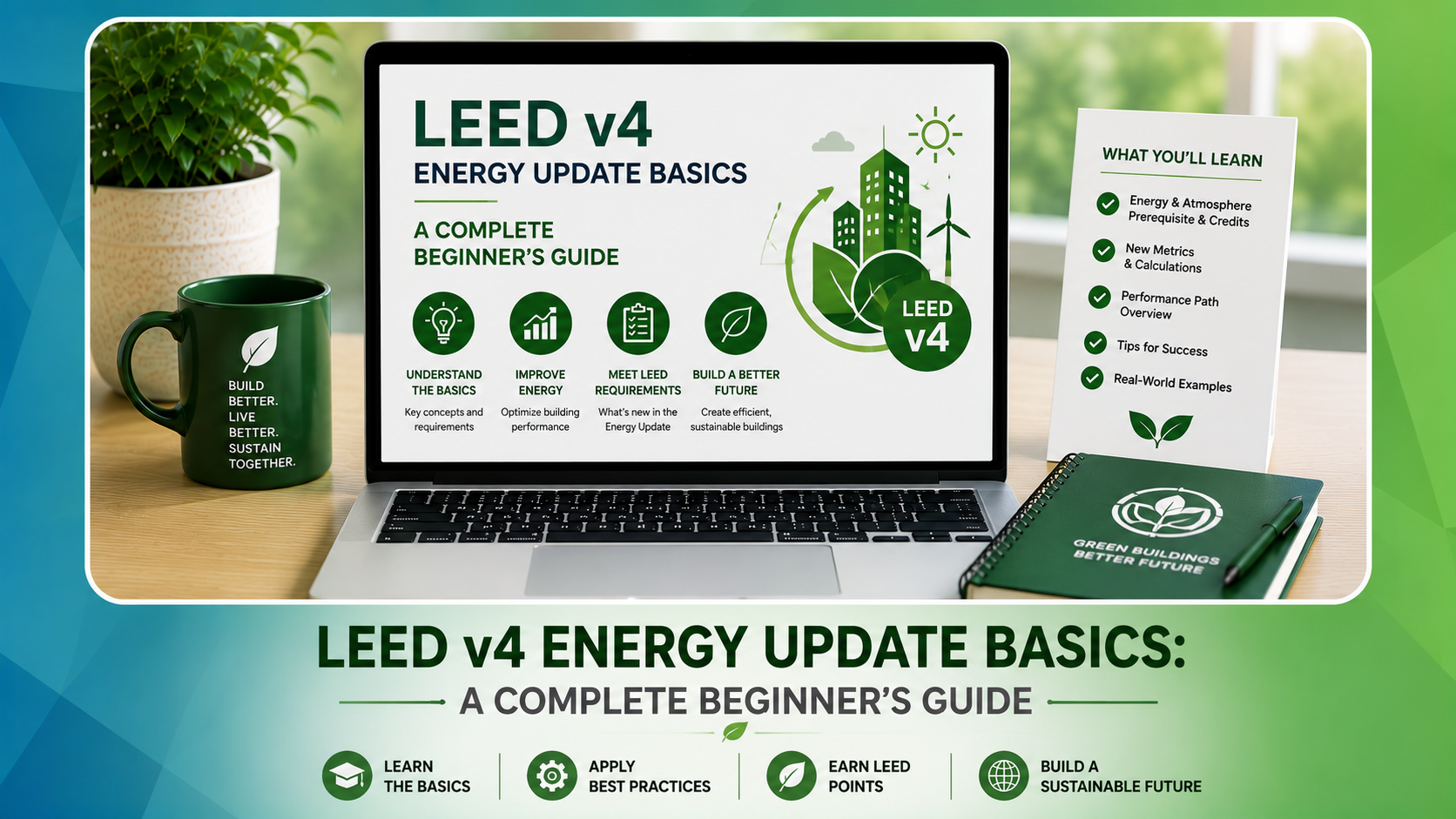
LEED v4 Energy Update Basics: A Complete Beginner's Guide
The LEED v4 energy update basics are essential knowledge for architects, engineers, sustainability consultants, facility managers, and anyone preparing for the LEED Green Associate or LEED AP exams. Energy efficiency has always been one of the core pillars of the Leadership in Energy and Environmental Design (LEED) rating system, but LEED v4 introduced more rigorous energy requirements to encourage higher-performing, lower-carbon buildings. These updates align LEED certification with modern building technologies, advanced energy modeling practices, and internationally recognized standards such as ASHRAE 90.1.
Understanding these energy updates is not only important for earning LEED certification but also for designing buildings that reduce operating costs, improve occupant comfort, and minimize environmental impact. From mandatory energy prerequisites to performance-based credits, LEED v4 emphasizes measurable improvements rather than simple design intentions. As a result, project teams must carefully evaluate energy strategies throughout the design, construction, and operational phases.
This guide explains the LEED v4 energy update basics in a clear and structured manner. You will learn why the updates were introduced, how they affect LEED projects, which standards they reference, and how energy performance is evaluated. Whether you are new to LEED or looking to strengthen your exam preparation, this article provides a comprehensive foundation for understanding one of the most important aspects of sustainable building certification.
What Is the LEED v4 Energy Update?
The LEED v4 energy update represents a significant advancement in how energy efficiency is evaluated within the LEED certification framework. Compared with earlier versions, LEED v4 raises the performance expectations for new and existing buildings by emphasizing measurable energy savings and improved building performance. The update integrates more stringent prerequisites and credits that encourage project teams to reduce energy consumption while lowering greenhouse gas emissions.
One of the most important changes is the stronger reliance on ASHRAE Standard 90.1, which serves as the primary benchmark for evaluating building energy performance. Instead of focusing solely on installing efficient equipment, LEED v4 encourages a holistic approach that considers building envelope design, HVAC systems, lighting efficiency, controls, renewable energy integration, and ongoing performance monitoring. This comprehensive strategy helps ensure that buildings perform efficiently throughout their entire life cycle.
The LEED v4 energy update basics also introduce enhanced energy modeling requirements that allow project teams to compare a proposed building against a baseline model. These simulations quantify expected energy savings and determine eligibility for valuable LEED credits. By using performance-based assessments, LEED v4 rewards projects that demonstrate genuine improvements rather than simply meeting prescriptive requirements.
Ultimately, the energy update reflects the growing global emphasis on decarbonization, operational efficiency, and sustainable development. It encourages organizations to design buildings that consume fewer resources, reduce long-term operating expenses, and create healthier environments for occupants while supporting broader environmental goals.
Why the LEED v4 Energy Update Matters
Understanding the LEED v4 energy update basics is critical because energy use represents one of the largest environmental impacts associated with buildings. Commercial and residential buildings account for a substantial share of global electricity consumption and carbon emissions, making energy efficiency a key priority for sustainable development. LEED v4 addresses this challenge by establishing more demanding performance standards that encourage smarter building design and operation.
For project owners, the updated energy requirements often translate into significant financial benefits. Buildings designed to meet LEED v4 energy standards typically consume less electricity and fuel, resulting in lower utility bills throughout their operational life. Improved energy efficiency can also reduce maintenance costs, extend equipment lifespan, and increase overall property value. These economic advantages make sustainable design an attractive long-term investment rather than simply an environmental initiative.
From an environmental perspective, the LEED v4 energy update supports global efforts to reduce greenhouse gas emissions and mitigate climate change. By promoting energy-efficient systems, renewable energy adoption, and advanced building controls, LEED-certified projects contribute to cleaner air and more responsible resource management.
For professionals pursuing LEED credentials, mastering the LEED v4 energy update basics is equally important. Energy-related prerequisites and credits represent a significant portion of LEED certification and frequently appear in LEED Green Associate and LEED AP examinations. A solid understanding of these concepts enables candidates to answer exam questions confidently while also applying sustainable energy principles in real-world building projects.
Who Does the Update Affect?
The LEED v4 energy update affects a wide range of professionals involved in sustainable building design, construction, certification, and operations. Whether you are pursuing LEED certification or participating in a green building project, understanding these updates is essential for meeting current energy performance requirements.
Architects and building designers are among the primary stakeholders impacted by the update because energy efficiency must now be considered from the earliest stages of project planning. Design decisions related to building orientation, insulation, glazing, lighting, and mechanical systems directly influence energy performance and the project's ability to satisfy LEED prerequisites and earn additional Energy and Atmosphere (EA) credits.
Mechanical, electrical, and plumbing (MEP) engineers must also adapt to the revised requirements. They are responsible for selecting high-efficiency HVAC equipment, lighting systems, controls, and renewable energy technologies that comply with the updated standards. Likewise, energy modelers play a critical role by performing whole-building energy simulations that demonstrate compliance with LEED performance targets.
Facility managers and building owners are equally affected because LEED v4 emphasizes operational performance rather than design intent alone. Buildings must be capable of maintaining efficient energy use throughout their lifecycle, making continuous monitoring and optimization increasingly important.
Finally, the update has a significant impact on professionals preparing for the LEED Green Associate and LEED AP exams. Questions related to the LEED v4 energy update basics frequently appear in certification exams, making a thorough understanding of these revisions essential for exam success and professional practice.
What Are the Primary Changes Affecting the Prerequisite and Credit in This Update?
One of the most significant aspects of the LEED v4 energy update basics is the refinement of both mandatory prerequisites and optional performance credits within the Energy and Atmosphere (EA) category. These revisions were introduced to encourage projects to achieve greater energy efficiency while aligning LEED with evolving building codes and industry best practices.
The update strengthens the Minimum Energy Performance prerequisite by requiring projects to demonstrate higher baseline efficiency before they can qualify for certification. Rather than simply meeting minimum code requirements, project teams must prove that the building satisfies stricter performance benchmarks based on the latest versions of ASHRAE Standard 90.1 or equivalent compliance paths.
The Optimize Energy Performance credit also underwent important changes. The updated methodology places greater emphasis on measurable energy savings obtained through whole-building energy simulation or approved prescriptive compliance options. Projects are rewarded based on actual improvements in predicted energy performance compared with a standardized baseline building, creating a more objective and transparent evaluation process.
In addition, the update increases the importance of integrated design strategies. Energy performance is no longer determined solely by mechanical equipment but by the interaction of the building envelope, HVAC systems, lighting, controls, occupancy patterns, and renewable energy systems. This holistic approach encourages collaboration among architects, engineers, sustainability consultants, and building owners to maximize efficiency throughout the entire building lifecycle.
What Are the Changes Specific to EA Prerequisite Minimum Energy Performance?
The EA Prerequisite: Minimum Energy Performance establishes the minimum energy efficiency level that every LEED project must achieve before earning certification. The LEED v4 energy update refines this prerequisite by introducing more demanding performance expectations and improving consistency with current energy standards.
One of the most notable changes is the continued reliance on ASHRAE Standard 90.1 as the benchmark for demonstrating compliance. Projects using the Performance Rating Method must compare the proposed building against a baseline building designed according to the referenced standard. This comparison evaluates energy consumption across major building systems, including heating, cooling, ventilation, lighting, service water heating, and other regulated loads.
The update also places greater emphasis on comprehensive energy modeling. Rather than evaluating individual building components independently, LEED encourages teams to analyze the building as an integrated system where improvements in one area may influence performance elsewhere. This holistic evaluation provides a more accurate representation of real-world energy consumption.
Another important enhancement is the stronger focus on building envelope performance, HVAC efficiency, lighting quality, and advanced controls. Project teams are encouraged to optimize these systems early in the design process to satisfy the prerequisite while establishing a strong foundation for earning additional Energy and Atmosphere credits.
By strengthening the Minimum Energy Performance prerequisite, LEED ensures that every certified building achieves a meaningful level of energy efficiency before pursuing higher levels of sustainability recognition.
What Are the Changes Specific to EA Credit Optimize Energy Performance (or EA Credit Annual Energy Use)?
The EA Credit: Optimize Energy Performance, referred to as Annual Energy Use in some LEED updates, rewards projects that significantly exceed the minimum energy performance requirements. Under the LEED v4 energy update basics, this credit has become one of the most valuable opportunities for earning points because it directly reflects measurable reductions in building energy consumption.
The updated credit encourages project teams to perform detailed whole-building energy simulations that estimate annual energy use under realistic operating conditions. These simulations compare the proposed building with a standardized baseline model developed according to ASHRAE Standard 90.1, allowing LEED reviewers to evaluate actual performance improvements rather than relying solely on equipment specifications.
The revised methodology also recognizes the contribution of high-performance building envelopes, efficient HVAC systems, advanced lighting controls, renewable energy technologies, and smart building automation. Instead of focusing on isolated upgrades, LEED rewards integrated design solutions that work together to minimize total annual energy demand.
In addition, the credit structure has been refined to better align awarded points with demonstrated energy savings. Projects achieving greater reductions in predicted energy consumption receive more LEED points, creating a clear incentive for continuous performance improvement. This performance-based approach supports lower operating costs, reduced carbon emissions, and enhanced building resilience while encouraging innovation in sustainable design.
For LEED professionals, understanding these updates is essential because Optimize Energy Performance remains one of the highest-value credits within the Energy and Atmosphere category and frequently appears in LEED certification examinations.
Why Is ASHRAE 90.1-2010 Still the Referenced Standard Within This Update?
Although the LEED v4 energy update introduces stricter energy performance requirements, it continues to reference ASHRAE Standard 90.1-2010 Appendix G as the primary compliance baseline. This decision was made to ensure continuity for project teams, energy modelers, and LEED professionals who have been using the LEED v4 framework since its original release. Rather than replacing the baseline entirely, USGBC chose to retain the familiar reference while strengthening the performance thresholds that projects must achieve.
Keeping ASHRAE 90.1-2010 as the official reference also minimizes disruption to existing compliance workflows. Many organizations have already developed modeling templates, software libraries, and internal quality assurance procedures based on Appendix G. Maintaining this reference allows these resources to remain valid while enabling projects to adopt more ambitious energy performance targets.
At the same time, the update recognizes that many jurisdictions and design teams now work with newer editions of ASHRAE 90.1. Therefore, LEED provides additional compliance pathways that allow projects using ASHRAE 90.1-2013, 2016, 2019, or later editions to demonstrate compliance through approved methodologies. This approach balances consistency with flexibility while supporting the industry's transition toward higher-performing buildings.
Ultimately, retaining ASHRAE 90.1-2010 preserves compatibility with existing LEED guidance while allowing the updated energy requirements to better reflect today's climate objectives and decarbonization goals. ()
How Is the Original LEED v4 Rating Differentiated from the v4 Update for Projects Referencing These Requirements?
The LEED v4 energy update introduces higher energy performance expectations without creating an entirely new rating system. Instead, it enhances the existing LEED v4 framework by strengthening the Energy and Atmosphere (EA) requirements while maintaining the overall certification structure. As a result, projects certified under the updated requirements demonstrate a higher level of environmental performance than those certified under the original LEED v4 energy criteria.
To distinguish between the two versions, the U.S. Green Building Council (USGBC) provides clear documentation during the certification process. Review reports identify projects that complied with the updated energy requirements, allowing building owners, government agencies, and incentive programs to recognize that these projects achieved the more rigorous performance standards.
This distinction is particularly important for jurisdictions that reference LEED within building regulations, tax incentives, or sustainability programs. Because climate policies continue to evolve, many authorities require evidence that certified buildings meet modern energy efficiency and greenhouse gas reduction expectations. The updated LEED v4 requirements help satisfy these objectives without requiring organizations to transition immediately to an entirely new rating system such as LEED v5.
For project teams, the difference lies primarily in the increased energy thresholds, expanded greenhouse gas evaluation, and revised credit calculations rather than changes to the certification levels themselves. This ensures a smooth transition while reinforcing LEED's commitment to continuous improvement and market leadership in sustainable building performance.
What Happens to Projects Registered Before the Update? Are They Required to Use the New Requirements?
One of the most common questions regarding the LEED v4 energy update basics concerns projects that were already registered before the revised requirements became effective. The answer is straightforward: these projects are not required to adopt the updated energy requirements.
According to the U.S. Green Building Council, the energy update became mandatory only for LEED v4 projects registered on or after March 1, 2024. Projects registered before this date may continue using the original LEED v4 Energy and Atmosphere prerequisites and credits that were in effect when their registration was completed. This policy protects project teams from having to redesign buildings or repeat energy modeling after significant design work has already been completed.
Maintaining the original requirements for previously registered projects also helps avoid unexpected increases in project costs, scheduling delays, and administrative complexity. Building owners and design professionals can proceed confidently with the certification path they initially selected while completing documentation according to the original LEED v4 guidance.
However, all new projects registered after the implementation date must comply with the updated requirements, including the revised performance thresholds, greenhouse gas metrics, and new compliance options. This phased implementation provides fairness to ongoing projects while ensuring that future LEED-certified buildings align with today's higher expectations for energy efficiency and carbon reduction.
How Were the Revised Thresholds Derived?
The revised performance thresholds introduced in the LEED v4 energy update were developed to better align LEED certification with global climate objectives and the latest advances in building energy efficiency. Rather than selecting arbitrary targets, the U.S. Green Building Council based the updated thresholds on extensive technical analysis, industry research, and evolving sustainability goals.
A primary reference for establishing the new minimum performance requirements was the level of improvement represented by ASHRAE Standard 90.1-2016 compared with ASHRAE 90.1-2010. By using these measurable improvements as a benchmark, USGBC created thresholds that reflect the energy performance expected from today's high-performing buildings while maintaining consistency within the LEED framework.
Another major factor influencing the revised thresholds was the increasing emphasis on greenhouse gas emissions. Unlike the original LEED v4 approach, the update evaluates both energy efficiency and carbon emissions, encouraging project teams to reduce operational carbon alongside overall energy consumption. As projects demonstrate greater reductions in energy use and greenhouse gas emissions, they become eligible for additional LEED points.
The revised thresholds also support long-term climate initiatives, including the building sector's contribution to 2030 decarbonization goals. By rewarding projects that approach near-zero operational emissions, the updated requirements encourage designers and owners to adopt integrated energy strategies, renewable energy technologies, and advanced building systems that deliver measurable environmental benefits throughout a building's lifecycle.
What Are the New Performance Percentage Thresholds in This New Energy Update?
One of the most significant improvements introduced in the LEED v4 energy update basics is the revision of the performance percentage thresholds used to evaluate energy efficiency. These updated thresholds raise the level of performance expected from LEED-certified projects while bringing LEED v4 closer to the requirements established in LEED v4.1. Rather than rewarding energy savings alone, the revised framework evaluates both energy efficiency and greenhouse gas (GHG) emissions reductions, encouraging projects to reduce operational carbon alongside overall energy consumption.
Under the updated methodology, the Optimize Energy Performance credit uses a dual-metric scoring system. Half of the available points are awarded based on improvements in energy performance, measured using either the cost metric or the source energy metric, while the remaining half is awarded based on reductions in greenhouse gas emissions. The final score is calculated by combining the points earned from both metrics, ensuring that projects achieve balanced improvements in efficiency and decarbonization rather than optimizing only one performance indicator.
Instead of relying on a single percentage threshold, the updated LEED credit tables contain multiple performance ranges that correspond to increasing point values. USGBC provides separate threshold charts in the official LEED Credit Library for each rating system. These charts illustrate how projects earn points as both energy savings and GHG reductions increase, with the highest scores reserved for buildings approaching near-zero operational emissions. This approach creates a more comprehensive assessment of building performance while aligning LEED certification with long-term climate goals and market expectations.
Can You Summarize the Additional Changes for Multifamily Projects Using LEED v4 BD+C: Multifamily Midrise or BD+C: Homes?
The LEED v4 energy update introduces several additional modifications specifically for residential projects certified under LEED v4 BD+C: Multifamily Midrise and LEED v4 BD+C: Homes. These revisions build upon the broader Energy and Atmosphere (EA) updates by refining how residential buildings are evaluated for energy performance and carbon reduction. The objective is to ensure that energy-related credits better reflect actual building efficiency while supporting LEED's transition toward decarbonization.
For Multifamily Midrise projects, the update includes all of the revised requirements for EA Prerequisite: Minimum Energy Performance and EA Credit: Annual Energy Use. In addition, USGBC has limited the magnitude of the Home Size Adjustment (HSA) credit, reducing the influence that dwelling size alone has on the total energy score. This adjustment encourages projects to earn points primarily through genuine improvements in building performance rather than through smaller residential unit sizes.
Another important revision is the modernization of commissioning references. The outdated ENERGY STAR High Rise program has been replaced with the current ENERGY STAR Multifamily New Construction (MFNC) requirements, ensuring that commissioning practices reflect today's residential construction standards and quality assurance procedures.
For LEED v4 BD+C: Homes, the update similarly revises the Home Size Adjustment methodology to maintain consistency with the Multifamily Midrise rating system. These coordinated changes create a more balanced and performance-driven evaluation process for residential LEED projects while reinforcing the importance of energy efficiency, renewable energy integration, and operational carbon reduction.
For Multifamily Midrise, Why Has the Home Size Adjustment Been Reduced?
One of the most notable residential changes within the LEED v4 energy update basics is the reduction of the Home Size Adjustment (HSA) for LEED v4 BD+C: Multifamily Midrise projects. This modification reflects USGBC's broader strategy of shifting the focus of LEED certification toward measurable energy efficiency improvements and greenhouse gas emissions reductions rather than rewarding building characteristics that may have only a limited impact on actual operational performance.
The Home Size Adjustment was originally introduced to recognize projects that reduced energy consumption by constructing smaller residential units. While this concept encouraged compact and efficient housing, later analysis of LEED Multifamily energy simulation data revealed that home size alone did not consistently correlate with lower modeled energy consumption per bedroom. In many cases, projects were receiving a substantial portion of their Energy and Atmosphere points simply because of unit size, even when the improvements in actual building performance were relatively modest.
To address this issue, USGBC reduced the maximum impact of the Home Size Adjustment so that Annual Energy Use points more accurately represent meaningful reductions in energy use and operational carbon emissions. This change encourages project teams to invest in strategies such as high-performance building envelopes, efficient HVAC systems, advanced controls, renewable energy technologies, and optimized building operations instead of relying heavily on dwelling size to improve certification outcomes.
Ultimately, the revised Home Size Adjustment strengthens the credibility of LEED certification by ensuring that energy-related points are awarded for demonstrable improvements in sustainability performance. The result is a more equitable and technically robust assessment that aligns Multifamily Midrise projects with LEED's long-term objective of accelerating building decarbonization while maintaining flexibility for diverse residential developments.
Latest posts




Copyright | LEED-Tricks All Rights Reserved . Made with MiskIts